

 Our Shared Values
 Our Business
 Our Foundations
 Our Achievements
 Our Governance
 Conservation Management & Monitoring
 Climate Change
 Community Engagement
 Partnerships & Memberships
 Human Rights & Labour
 Responsible Sourcing
 Responsible Production
 Certifications
 Sustainability Report
 Palm-based Food Products
 Other Food Products
 Oleochemicals
 Bioenergy
 Food & Nutrition Innovation
 Press Releases
 Stories
 Meet Our Experts
 In the News
 Publication
 Shareholder Information
 Disclosure of Information
 Financial Information
 Prospective Suppliers
 Support for Palm Suppliers
 FAQ
FAQ Existing Non-Palm Suppliers
 Graduates & Professionals
 Scholarships
 Internships
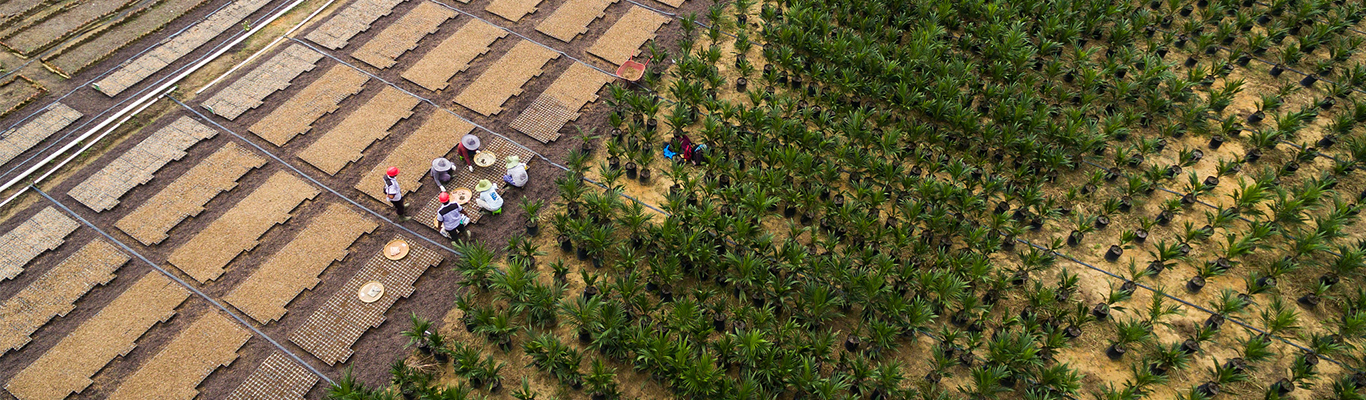
At the heart of every thriving community is a dream – a dream for families to have enough to eat, for incomes to grow, and for the environment to be protected for future generations.

For Purnawarman, a farmer from the Koperasi Sinar Bulan group, expanding into chicken farming in 2024 was a new adventure. Initially focused on palm oil, chilli, and rubber, he saw the opportunity for an additional income stream by raising 481 laying hens through the Bright Future Initiative. Although the journey has had its challenges – ranging from the high cost of chicken feed to the daily care needed – he’s already seeing the benefits. “Feeding, cleaning, and keeping the chickens healthy is a lot of work,” Purnawarman says, but the income and valuable manure for fertiliser have made the effort worthwhile.

Similarly, Yudi, a member of Mitra Harapan Farmer Group in Belitung, found himself on a new path with hydroponics through the initiative. Skeptical at first, Yudi and his group embraced the training, learning how to manage a hydroponic system and control pests without pesticides. Their first harvest of 300 kilograms of pak choi was a promising start, even with challenges like crop damage. “This programme has given us new skills and another source of income,” Yudi reflects, as the group continues to refine their techniques and expand their yields.
Through the support of the Bright Future Initiative, transformations like these are becoming a reality for farmers like Purnawarman and Yudi. So, how do we support farmers through the Bright Future Initiative? We use a structured, five-stage approach that turns aspirations into actionable plans, equipping farmers with the tools and knowledge for lasting change.
Stage one: Sustainable Livelihood Assessment


Every journey begins with understanding. Through the Sustainable Livelihood Assessment, we connect directly with farmers and community leaders to identify local challenges, evaluate their existing resources, and explore possible solutions. Together, we map out the land, discuss their skills and ambitions, and determine potential projects to drive long-term change. This collaborative process helps us uncover opportunities for sustainable impact.
By involving communities in their own empowerment from the start, we see more meaningful and lasting outcomes. Studies have shown that when communities are engaged in the decision-making process and supported with resources, they experience greater resilience and productivity than when simply given financial aid. This approach sets the stage for targeted, community-led projects that lead to real and sustainable change.

Stage two: Field School – Learning in the open


The Field School is where theory meets action. But it’s not a typical classroom with desks and whiteboards; it’s set in the fields, right where the action happens.
Through hands-on learning, community members gain practical experience with sustainable farming techniques. Expert farmers lead sessions, teaching participants how to care for their land while boosting productivity. Sustainable agricultural methods, like those we teach, can reduce the environmental footprint while improving yields, by up to 58%. This stage empowers communities to become not just farmers, but stewards of their own environment.

Stage three: Participative Evaluation – Progress and adaptation


Once the groundwork is laid, it’s time to reflect on the progress.
Participative Evaluation is a checkpoint for communities to assess what’s working and what could be improved. This process encourages long-term success by enabling communities to adapt through hands-on learning, trying out new ideas, and finding what best suits their unique needs. Since community empowerment isn’t a one-size-fits-all approach, this flexible evaluation helps tailor strategies to each community’s specific challenges and conditions.

Stage four: Replication – Putting knowledge into practice


Do You Know?Communities involved in peer learning experience a 20-30% boost in productivity. By sharing knowledge and collaborating with one another, farmers can adopt best practices more effectively and achieve greater success. Peer learning creates a supportive environment where everyone benefits from collective insights and experience.
With skills and knowledge in hand, it’s time for the community to take the lead.In the Replication phase, farmers apply what they’ve learned to their own land. A key part of this phase lies in increasing the adoption of integrated farming within the group. Integrated farming combines various agricultural activities, such as crops, livestock, or fish farming, allowing farmers to diversify their production and get more out of their land and resources.
Farmers don’t go through this journey alone. Participants continue to meet regularly as a group to share lesson learned, exchange ideas, and troubleshoot challenges together. The peer support makes sure that everyone stays on track and moves forward.

Stage five: Independence and network expansion


The final stage is the most rewarding – Independence. After months of learning and adapting, communities become fully self-sufficient by producing enough food for their families and earning additional income from surplus sales. On average, families can save Rp300 thousands monthly by growing their own food and earn an extra Rp1 million by selling the surplus. Micro, Small, and Medium Enterprises (MSMEs) that have applied the skills they’ve learned through the programme can earn up to Rp40 million annually.
Farmers and MSMEs also build valuable networks with neighbouring villages and institutions, expanding their market reach and creating new opportunities for business partnerships. To help them grow, we provide training in accounting and bookkeeping, offer guidance on logistics and delivery management, and connect them to platforms that allow them to automate their sales. Some have even ventured into digital store expansion, tapping into broader markets through online platforms. That way, we’re not just fostering financial independence, but also encouraging them to build strong relationships that allow them to flourish.
At this stage, the vision of a self-sustaining, thriving community is no longer a dream. It’s a reality where knowledge, support, and opportunity continue to grow and last for a long term.

Voices of change: Reflections from communities
The true impact of the Bright Future Initiative is best seen in the stories of farmers who have grown and thrived through the programme. By adopting new techniques and building stronger businesses, they’ve found new ways to provide for their families and communities. These stories highlight the impact of community-led progress and how sustainable change can truly make a difference.
Check out our video to explore the five stages of the Bright Future Initiative and see how we empower communities:


——–
We take an active interest in building stronger communities. From strategic partnerships to promoting economic empowerment, we are in the business of growing.
Discover our diverse approach to uplifting communities.
——–