

 Our Shared Values
 Our Business
 Our Foundations
 Our Achievements
 Our Governance
 Conservation Management & Monitoring
 Climate Change
 Community Engagement
 Partnerships & Memberships
 Human Rights & Labour
 Responsible Sourcing
 Responsible Production
 Certifications
 Sustainability Report
 Palm-based Food Products
 Other Food Products
 Oleochemicals
 Bioenergy
 Food & Nutrition Innovation
 Press Releases
 Stories
 Meet Our Experts
 In the News
 Publication
 Shareholder Information
 Disclosure of Information
 Financial Information
 Prospective Suppliers
 Support for Palm Suppliers
 FAQ
FAQ Existing Non-Palm Suppliers
 Graduates & Professionals
 Scholarships
 Internships
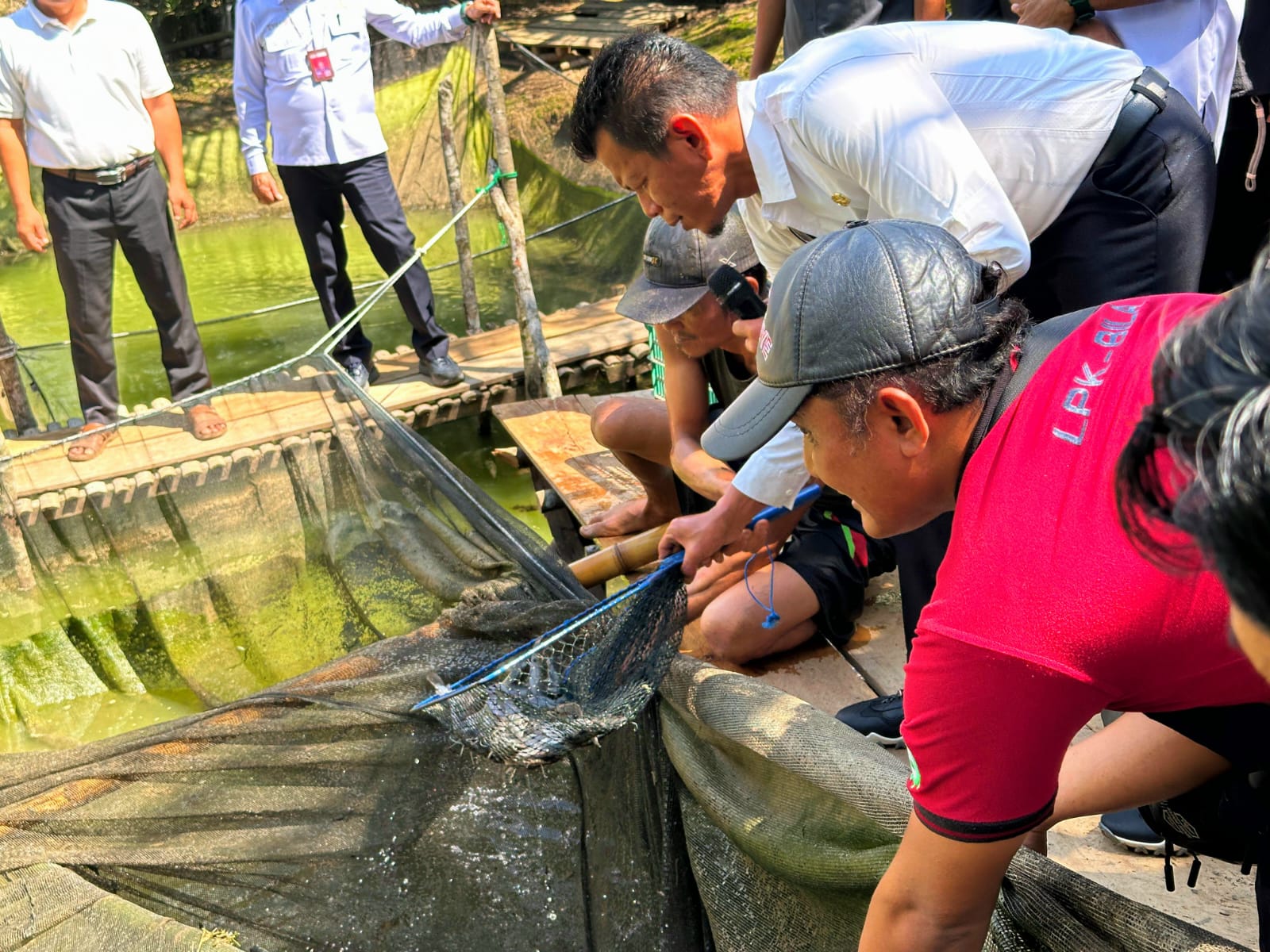
Lahat, 9 May 2026 – PT Sawit Mas Sejahtera (PT SMS), a subsidiary of Sinar Mas Agribusiness and Food, carried out the first harvest of its freshwater fish farming programme focusing on catfish cultivation in Beringin Jaya Village, Lahat Regency, South Sumatra. The activity was attended by the Lahat Regency Fisheries Agency, the Head of Beringin Jaya Village, and the Beringin Jaya Farmer Group as the programme implementer.
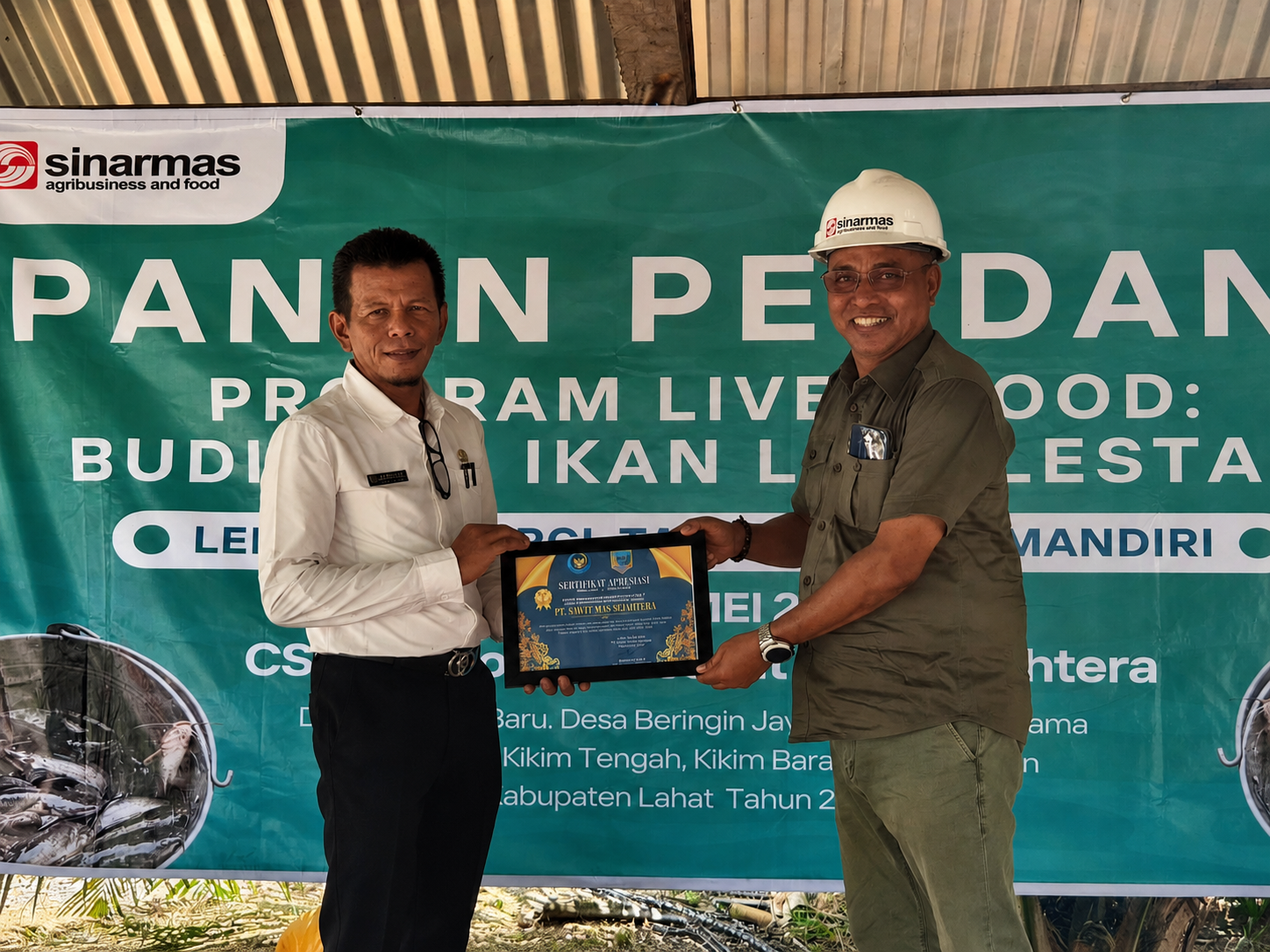
During the event, the Lahat Regency Government, through the Fisheries Agency, presented an appreciation award to PT Sawit Mas Sejahtera for the company’s contribution to supporting freshwater fish farming development in Beringin Jaya Village. The recognition also acknowledged the company’s support for the Fish Self Sufficiency Programme in Lahat Regency.
The catfish farming programme has been running since 2025 and is managed by the Beringin Jaya Farmer Group, which consists of 10 members. During the first harvest, the farmer group successfully produced 1.6 tonnes of catfish. The harvest was used to help meet the consumption needs of the surrounding community and distributed to local traders.
The programme aligns with the Fish Self Sufficiency Programme, one of the priority programmes of the Regent of Lahat, which has been implemented since 2019. Through support for freshwater fish farming, the company aims to help strengthen food security, improve community nutrition, and support the local village economy. Catfish was selected because of its nutritional value, relatively simple cultivation process, short harvest cycle of around two to three months, and strong popularity among communities around Beringin Jaya Village.
Abdurahman Marasabessy, Manager of Sungai Saling Estate, said the programme forms part of the company’s commitment to supporting the livelihoods of communities surrounding its operational areas.
“Every programme we implement must have clear indicators of success while also considering local conditions and potential. This first harvest demonstrates that catfish farming has strong potential for further development. We hope the programme can continue and support the economic independence of communities in Beringin Jaya Village and surrounding areas. Our goal is to grow together with the community,” said Abdurahman.
Abdil Musaddad, facilitator of the catfish farming programme, explained that participants received guidance on the fundamentals of freshwater fish farming, particularly catfish cultivation. As part of the programme, 16,000 catfish fingerlings were stocked and raised by the farmer group until harvest.
Meanwhile, Darwis, Head of Beringin Jaya Village, expressed his appreciation for the company’s support in developing freshwater fish farming in the village.
“The implementation of this programme has gone smoothly. We are very grateful to the company for supporting freshwater fish farming in Beringin Jaya Village. We hope this programme can support the Fish Self Sufficiency Programme while also helping meet the nutritional needs of the community in Beringin Jaya Village,” said Darwis.
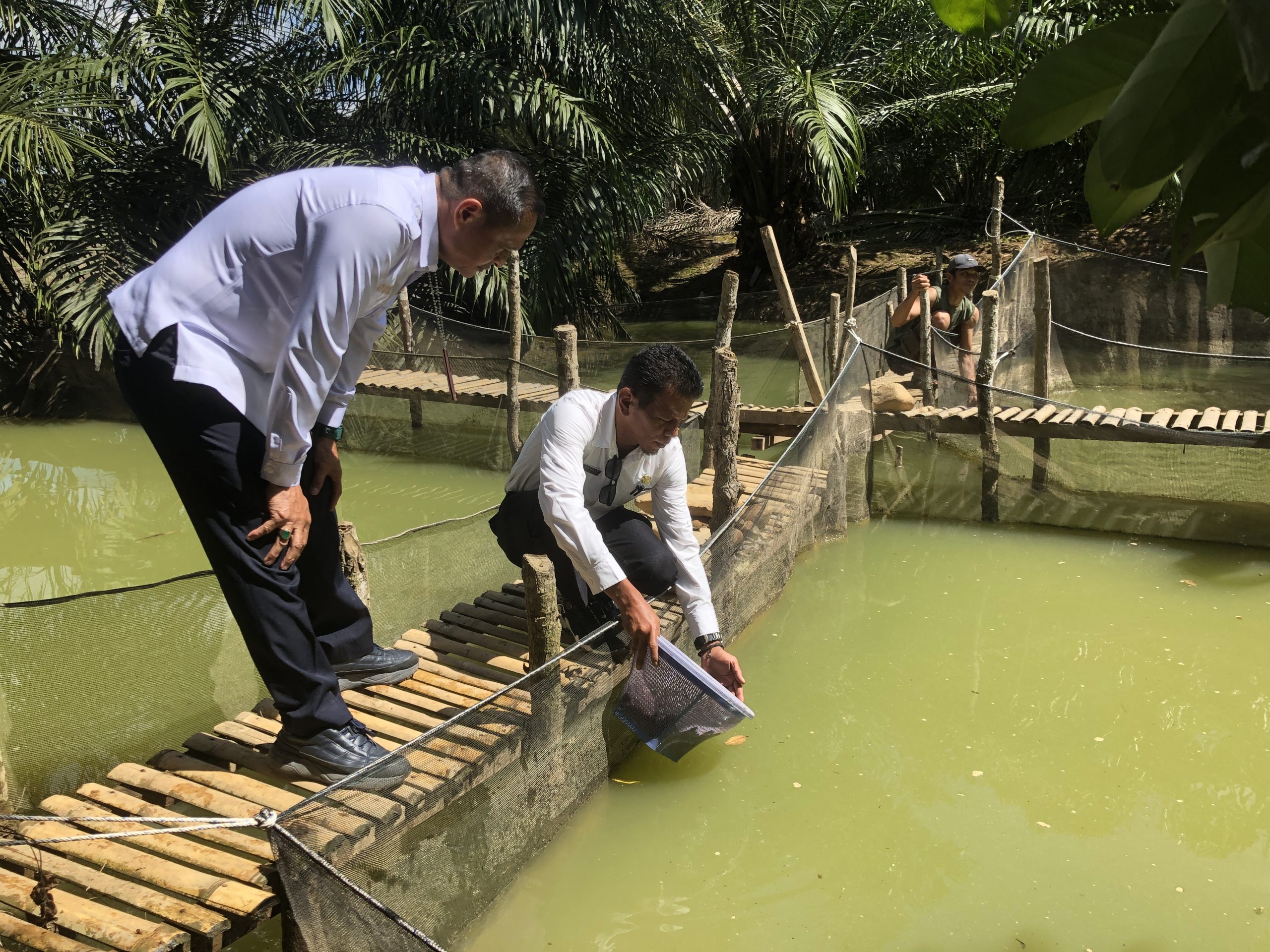
Similarly, Marully, Head of the Lahat Regency Fisheries Agency, also expressed appreciation for the first harvest. According to him, the activity demonstrates strong collaboration between the private sector, government, and local communities in supporting freshwater fisheries development in Lahat Regency.
“Today’s harvest is clear evidence of synergy between the private sector, government, and the community. We appreciate the company’s contribution to local communities, and we hope this initiative can continue sustainably,” said Marully.
Marully added that the Lahat Regency Fisheries Agency is currently updating data on active fisheries groups so they can be included in future programme planning. According to him, market demand for catfish remains high, making collaboration essential to connect producers with markets.
“Demand for catfish in the market remains high, reaching around three tonnes per day. The Fisheries Agency can act as a facilitator to connect producers with markets and consumers. Going forward, we also see broader development opportunities, including the potential for catfish exports. With strong collaboration, we believe this can be achieved,” he added.
This community empowerment programme forms part of the Bright Future Initiative, Sinar Mas Agribusiness and Food’s acceleration network for Micro, Small and Medium Enterprises (MSMEs), which has supported 113 MSMEs in implementing and developing 189 projects across the company’s operational areas in Indonesia.
Through this programme, Sinar Mas Agribusiness and Food continues to support community empowerment through sustainable livelihood programmes tailored to local needs and potential. The catfish farming programme in Beringin Jaya Village is expected to continue growing and provide economic, social, and food security benefits for surrounding communities.
About Sinar Mas Agribusiness and Food
Sinar Mas Agribusiness and Food, which operates under Golden Agri-Resources (GAR), is one of the leading palm oil plantation companies, with a total planted area in Indonesia of over half a million hectares, including plasma, and works with more than 800,000 smallholders farmers. As part of GAR’s global agribusiness with a seed-to-shelf approach, the company manages an integrated business across the production of food products derived from vegetable oils, and continues to grow with purpose, delivering long-term value through sustainable palm oil production practices.
In Indonesia, the company’s main activities include oil palm cultivation and harvesting, processing fresh fruit bunches into Crude Palm Oill (CPO) and palm kernel, and refining CPO into value-added products such as cooking oil, margarine, shortening, and biodiesel for markets worldwide. The company also operates in China and India, with facilities for processing vegetable oils and food products. In 2025, the company produced approximately 2.8 million tonnes of palm-based products, across more than 30 consumer brands.
Sustainability is an integral part of the company’s operations. In line with GAR’s Responsible Agri-Commodity Sourcing policy and Collective for Impact framework, it is committed to ensuring responsible practices, enhancing supply chain transparency, and delivering positive environmental and social impact. Currently, 99.5% of its palm oil supply chain in Indonesia is traceable to the plantation level, while non-palm commodities are 100% traceable to the mill level.
Its parent company, GAR, was founded in 1996 and listed on the Singapore Exchange in 1999, with a market capitalisation of US$2.8 billion as of 31 December 2025. Flambo International Limited, an investment company, is currently GAR’s largest shareholder, with a 50.56% stake. GAR has several subsidiaries, including PT SMART Tbk, which has been listed on the Indonesia Stock Exchange since 1992. With operations in 14 countries and products sold in over 110 markets, GAR combines global scale with local insight. Beyond palm, GAR is a global trader of sugar, soybean, sunflower, and coconut, supported by strong shipping and logistics capabilities.