

 Our Shared Values
 Our Business
 Our Foundations
 Our Achievements
 Our Governance
 Conservation Management & Monitoring
 Climate Change
 Community Engagement
 Partnerships & Memberships
 Human Rights & Labour
 Responsible Sourcing
 Responsible Production
 Certifications
 Sustainability Report
 Palm-based Food Products
 Other Food Products
 Oleochemicals
 Bioenergy
 Food & Nutrition Innovation
 Press Releases
 Stories
 Meet Our Experts
 In the News
 Publication
 Shareholder Information
 Disclosure of Information
 Financial Information
 Prospective Suppliers
 Support for Palm Suppliers
 FAQ
FAQ Existing Non-Palm Suppliers
 Graduates & Professionals
 Scholarships
 Internships
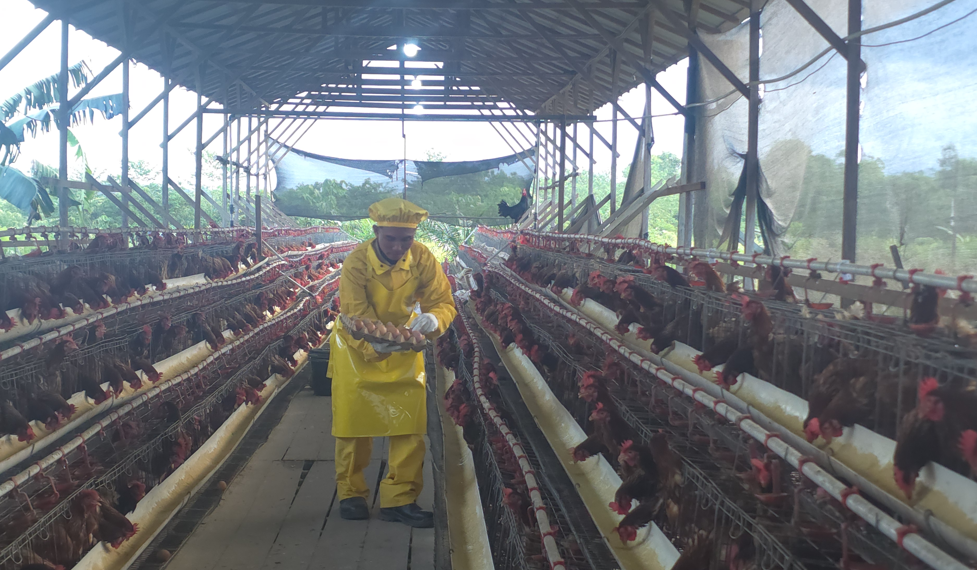
Ketapang, West Kalimantan (20 July) – Community-based layer farming continues to create new economic opportunities for residents of Siantau Raya Village, Ketapang Regency, West Kalimantan. Through the Integrated Ecological Agriculture (PET) Programme, PT Agrolestari Mandiri (AMNL), in collaboration with the Siantau Raya Joint Business Group (KUB) and the Integrated Ecological Agriculture Facilitators Communication Forum (FKPPET), is strengthening community empowerment by promoting agribusiness development across the entire value chain. This includes training on value-added product diversification using outputs from layer farming.
The training, attended by members of KUB Siantau Raya, the Family Welfare Movement (PKK), and the Dharma Wanita association of Sungai Kelik Estate, aims to enhance community skills in processing poultry products into higher-value goods. The initiative is expected to strengthen local enterprises, increase household incomes, and support greater economic self-reliance within the village.
One of the programme’s key achievements has been the emergence of four young farmers who now manage the layer farming enterprise and serve as pioneers in fostering the next generation of agribusiness entrepreneurs in Siantau Raya Village. Their involvement demonstrates that livestock farming can provide a promising livelihood for young people when supported through mentoring, capacity building, and multi-stakeholder collaboration.
According to Kaswadi, Estate Manager of Sungai Kelik Estate, the initiative builds on the Integrated Ecological Agriculture (PET) Programme first introduced by AMNL in 2016, which has continued to evolve in response to the community’s needs and local potential.
“Since 2024, the programme has focused on developing alternative sources of income through layer farming, covering the entire value chain from production to downstream activities. Beyond increasing egg production, we are encouraging the community to develop value-added products so that the economic benefits generated are greater and more sustainable. We hope more people, particularly younger generations, will recognise agribusiness as a viable and attractive business opportunity,” said Kaswadi.
The programme adopts a community-based agribusiness model that integrates economic, social, environmental, and welfare objectives. Alongside increasing egg production, it also promotes the productive use of livestock by-products, creating a circular economy system that delivers additional value to the community.
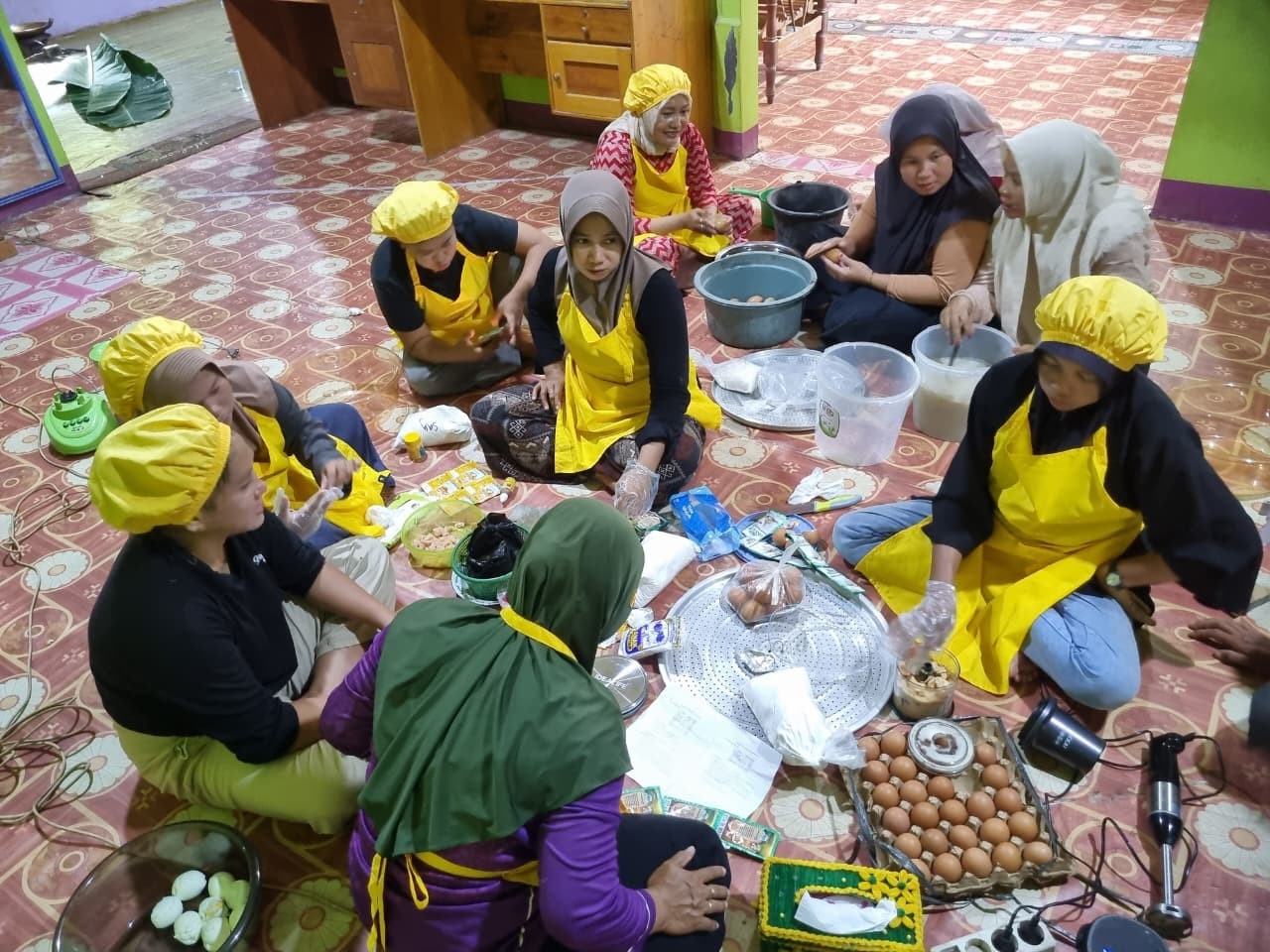
The initiative has also been welcomed by Norrahman, a representative of Siantau Village and an active participant in the programme. “Through this product diversification training, we have learned that livestock farming is not limited to selling eggs. The products can also be processed into a range of higher-value goods. We hope the knowledge we have gained will encourage us to continue innovating and enable more locally produced products to contribute to increasing community incomes,” said Norrahman.
Since the programme was introduced, monthly egg production has increased from 13,410 to 36,125 eggs, with peak production reaching 37,755 eggs per month. In addition to higher production, the community has successfully developed a range of value-added products, including salted eggs, egg crackers, chicken amplang crackers, chicken meatballs, organic compost, and independently produced day-old chicks (DOC). The conversion of livestock waste into organic compost further supports the circular economy approach while reducing waste generation.
Looking ahead, PT AMNL will continue strengthening collaboration with its partners to enhance the capacity of community groups, expand product diversification, and further develop a circular economy-based agribusiness model that delivers sustainable economic, social, and environmental benefits. The experience of KUB Siantau Raya demonstrates that youth regeneration in agriculture, women’s empowerment, rural economic development, and strengthened food security can progress simultaneously, providing a model with strong potential for replication in other regions.