

 Our Shared Values
 Our Business
 Our Foundations
 Our Achievements
 Our Governance
 Conservation Management & Monitoring
 Climate Change
 Community Engagement
 Partnerships & Memberships
 Human Rights & Labour
 Responsible Sourcing
 Responsible Production
 Certifications
 Sustainability Report
 Palm-based Food Products
 Other Food Products
 Oleochemicals
 Bioenergy
 Food & Nutrition Innovation
 Press Releases
 Stories
 Meet Our Experts
 In the News
 Publication
 Shareholder Information
 Disclosure of Information
 Financial Information
 Prospective Suppliers
 Support for Palm Suppliers
 FAQ
FAQ Existing Non-Palm Suppliers
 Graduates & Professionals
 Scholarships
 Internships
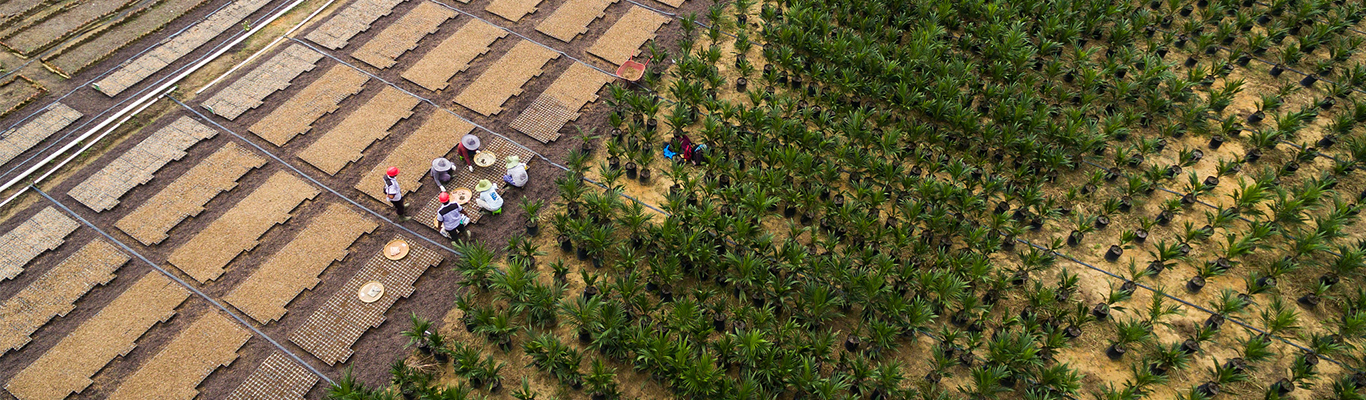
You’re at the heart of a palm oil mill, watching as millions of Palm Kernel Shells (PKS) are separated from harvested fruit. This is no ordinary waste. If handled correctly, PKS can replace coal, generate clean energy, and fuel industries sustainably.
But here’s the challenge: not all PKS makes the cut.
Moisture levels, size, and sorting all play a role in whether PKS burns effectively or goes to waste. One wrong step, and its energy potential drops.
Do you have what it takes to transform PKS into a high-performance biofuel? Your decisions will determine whether it becomes a powerful energy source or a lost opportunity.
Let’s get started!
Stage 1: Fresh Fruit Bunches (FFBs) arrive at the mill
The journey begins at the plantation, where FFBs are harvested and sent to the mill. Time is of the essence in this process. To preserve their quality and oil content, these bunches must be processed within 24 hours.
Check out how we deliver FFBs to the mills within 24 hours:
What’s the best next step?
Correct!
Great choice! Inspecting and grading the FFBs means only the ripest bunches are processed. This is key for:
Peak oil extraction.
Easier PKS separation.
Consistent quality for bioenergy production.
After grading, the bunches move into the mill for further processing.
Incorrect!
Since the FFBs weren’t graded, unripe and overripe bunches are processed together. This leads to:
Lower oil extraction efficiency.
PKS with inconsistent quality.
Increased waste and inefficiency.
Let’s move on and see what happens next!
Stage 2: Cracking open the potential
After the fleshy mesocarp is pressed to extract Crude Palm Oil (CPO), the remaining nuts are separated and sent to nutcracker machine. Here, the machine cracks the nuts, separating the palm kernels from the shells. Palm Kernel Shell (PKS) is then recovered as a valuable byproduct.
How should PKS be handled next?
Correct!
Excellent! Not all PKS is suitable for biofuel. Sorting allows us to select:
Right size for better combustion efficiency.
Lower moisture for higher energy output.
Fewer impurities for cleaner emissions.
With the best shells selected, PKS is now prepped for screening.
Incorrect!
By skipping sorting, the batch of PKS includes wet, dust-filled, and shell pieces of inconsistent size. This seems like an efficient way to maximise output, but in reality, it results in:
Uneven combustion where some pieces burn too fast, others too slow.
Higher moisture content which produces more emissions.
Reduced energy efficiency where fuel performance is unpredictable.
Although the PKS can still be used, its efficiency is lower than it could be. Now that we understand this, let’s move on to the next stage.
Stage 3: Screening for quality and safety
After cracking, Palm Kernel Shell (PKS) must be screened to remove unwanted materials. This involves using metal detectors and screening equipment to eliminate metals, rocks, plastics, and other impurities before the PKS is stored or used.
What’s the best approach to screening PKS?
Correct!
Great choice! Using multiple screening steps, such as metal detectors followed by vibrating screens, removes a wide variety of contaminants.
PKS stays free from metals, rocks, and plastics.
Cleaner PKS protects processing equipment and improves combustion.
Consistent fuel quality is achieved, making PKS a reliable biomass resource.
Incorrect!
Using only one screening process might be faster, but it risks leaving behind unwanted debris.
Metals or stones may slip through, damaging equipment or lowering fuel quality.
Inconsistent cleaning can result in uneven combustion and reduced efficiency.
Over time, this can lead to higher costs and unreliable biomass fuel.
Stage 4: Storage and transportation
After screening and drying, it’s important to maintain the quality of PKS before it reaches biomass facilities. But how it should be stored to avoid moisture and contamination?
How should PKS be stored?
Correct!
Excellent choice! Storing PKS in controlled facilities ensures:
High calorific value.
Low moisture and mould risk.
Ready for efficient, reliable bioenergy use.
Not recommended
Open-air storage can expose PKS to weather which increases moisture. This may reduce fuel efficiency and reliability. Best results come from proper, controlled storage and regular quality checks.
Success! You’ve turned waste into energy.
Through every choice you made, Palm Kernel Shells (PKS) have been transformed from a byproduct into a powerful bioenergy solution. This reflects our commitment: optimising resources, lowering emissions, and advancing the transition to renewable energy.
Learn more about our bioenergy solutions.