

 Our Shared Values
 Our Business
 Our Foundations
 Our Achievements
 Our Governance
 Conservation Management & Monitoring
 Climate Change
 Community Engagement
 Partnerships & Memberships
 Human Rights & Labour
 Responsible Sourcing
 Responsible Production
 Certifications
 Sustainability Report
 Palm-based Food Products
 Other Food Products
 Oleochemicals
 Bioenergy
 Food & Nutrition Innovation
 Press Releases
 Stories
 Meet Our Experts
 In the News
 Publication
 Shareholder Information
 Disclosure of Information
 Financial Information
 Prospective Suppliers
 Support for Palm Suppliers
 FAQ
FAQ Existing Non-Palm Suppliers
 Graduates & Professionals
 Scholarships
 Internships
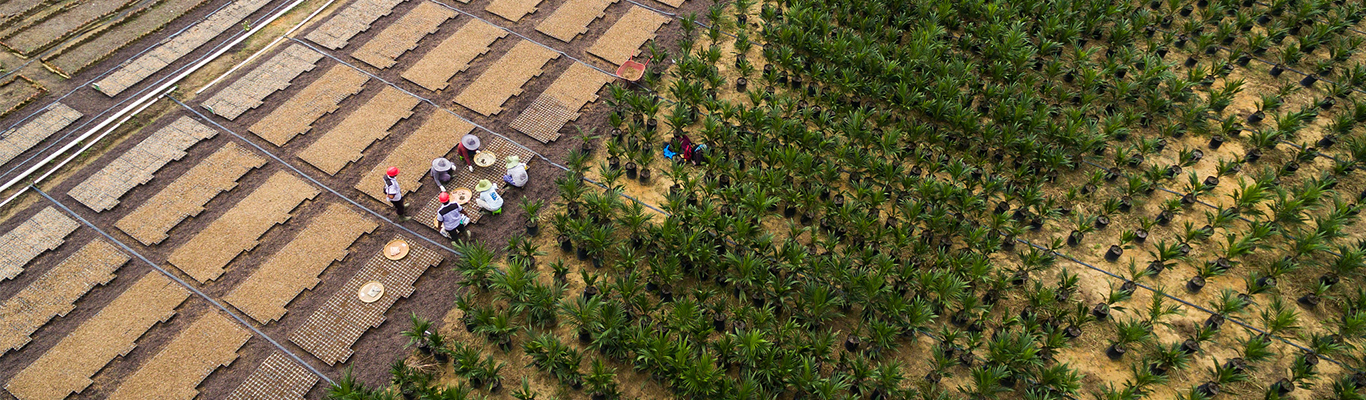
For officers like Candra Yogi Feriyawan, traceability means navigating a maze of data, technology, and on-the-ground realities to safeguard the integrity of our palm supply chain. The complex structure of the palm oil supply chain does not make it easy. While the palm supply chain is relatively concentrated in the downstream (the processing side of the supply chain), it is exceptionally fragmented in the upstream, dotted with numerous small plantations. As a result, a single shipment can have palm oil from thousands of different plantations.
What is traceability? Our approach

Where the tracking begins


Our traceability journey begins when the Origination team identifies a supplier as a potential supplier, who gathers and submits key details.
Traceability can actually boost the market value of palm oil?When smallholders and dealers can prove that their Fresh Fruit Bunches (FFBs) are legally and ethically sourced, they can gain access to premium markets that are willing to pay more for certified, traceable products.
So, while the benefits might not be immediate, the long-term gains can be substantial.
From field to system


Traceability is a legal requirement under EU Deforestation-Free Regulation.To enter EU market, products must be traceable back to the source to ensure they are deforestation-free.
We now have 99% Traceability to the Plantation (TTP) as of end 2023 for our palm supply chain in Indonesia and total traceability of our own estates. We are now mapping our global supply chain for palm and non-palm products, including sugar and soy.
Learn more about how we can help navigate EUDR requirements here.
Fact-checking with boots on the ground and eyes in the sky


Gathering data is part of the process. Making sure that the data is accurate and reliable is another.
We use advanced technologies like remote sensing and our Geographic Information System (GIS) to confirm the exact locations of mills and plantations and match our data with real-world conditions.
We implement a confidence level system that ranks data accuracy based on its source, from the highest trust in verified data to broader, less specific sources. “This system helps us assess data trustworthiness and focus our verification efforts where it’s needed most,” Candra explains.
But technology alone isn’t enough. “We also rely on on-the-ground inspections,” he continues. We work closely with dealers during their FFB collections from smallholder plantations to verify data directly at the source.

Wrapping up with verifications
Verification is crucial for our traceability efforts to stand up to scrutiny.
Major buyers like FMCGs regularly use our traceability data during audits. These audits are closely tied to verifying our deforestation-free supply chain.
While verifying every supplier is challenging, we use a reliable sampling method to cover most of our supply chain. “We ask mills to update their traceability declarations every six months to keep our data fresh. We’re also working with independent verifiers to assess if our supply chain meets the rigorous audits,” Candra points out.
This ongoing cycle of collecting, verifying, and sharing data helps us maintain transparency and build lasting trust with customers and partners.
——–
Our capabilities and commitment to sustainability position us to meet the evolving requirements, like EUDR, and be ready to support customers, buyers, and suppliers every step of the way.
Discover how our work aligns with these regulations and how we can assist you in meeting them.
——–