

 Our Shared Values
 Our Business
 Our Foundations
 Our Achievements
 Our Governance
 Conservation Management & Monitoring
 Climate Change
 Community Engagement
 Partnerships & Memberships
 Human Rights & Labour
 Responsible Sourcing
 Responsible Production
 Certifications
 Sustainability Report
 Palm-based Food Products
 Other Food Products
 Oleochemicals
 Bioenergy
 Food & Nutrition Innovation
 Press Releases
 Stories
 Meet Our Experts
 In the News
 Publication
 Shareholder Information
 Disclosure of Information
 Financial Information
 Prospective Suppliers
 Support for Palm Suppliers
 FAQ
FAQ Existing Non-Palm Suppliers
 Graduates & Professionals
 Scholarships
 Internships
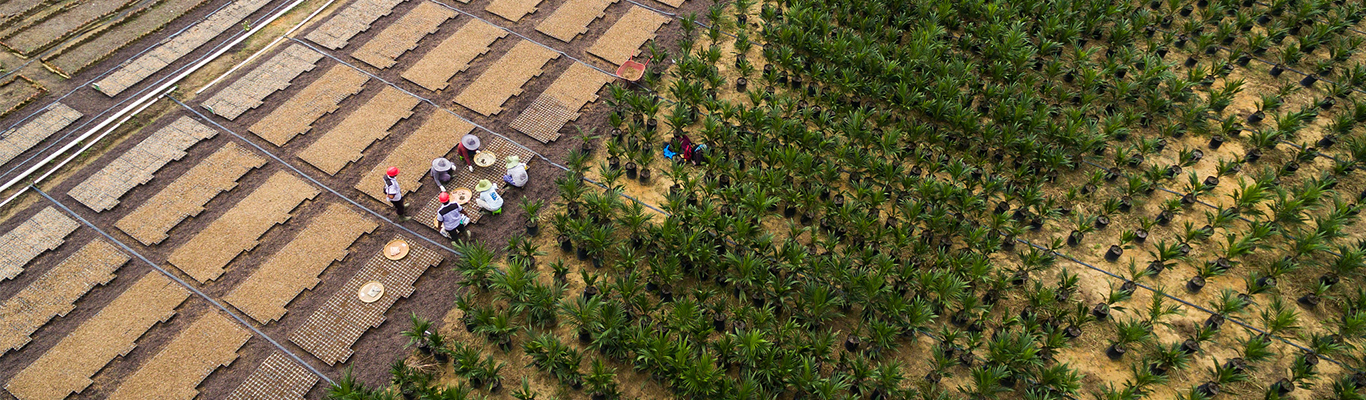
For oil palm farmers, caring for their plantations is not just about today’s harvest, but also about securing their family’s future. The PSR programme supports farmers with funding, quality seedlings, and training to boost yields and improve livelihood.

Sukasno has been involved in oil palm cultivation in Meranti Village, Jambi, since 1991. This arrangement helped him to provide for his family’s daily needs, pay for his children’s education, and even save a portion for the future.
When the oil palm trees in his plantation grew old and less productive, Sukasno faced a difficult dilemma. Replanting required a significant amount of money, and during the replanting period, he would lose his main source of income for up to three years while waiting for the young oil palms to produce fruit.
The situation began to change when Gapoktan Sumber Urip, the farmer group to which Sukasno belongs, started exploring a partnership with PT Kresna Duta Agroindo (KDA) through its replanting programme (Peremajaan Sawit Rakyat/PSR). The programme is aligned with Sinar Mas Agribusiness and Food’s sustainability framework, Collective for Impact, which aims to train 100,000 smallholders in good agricultural practices by 2035.
During outreach meetings with PT KDA and government officials, the farmers learned that they could receive IDR 50 million for every 2 hectares replanted as financial support to help rebuild their plantations.

At first, Sukasno was hesitant, but seeing the commitment from both the company and the government gave him the confidence to join. “Back then, before the PSR programme was implemented, the Gapoktan management held meetings and outreach sessions to explain the programme. They explained openly about the funding for the plantation development, which made us interested, although at first, we were doubtful. I wondered, is it true that the fund does not need to be repaid?” said Sukasno.
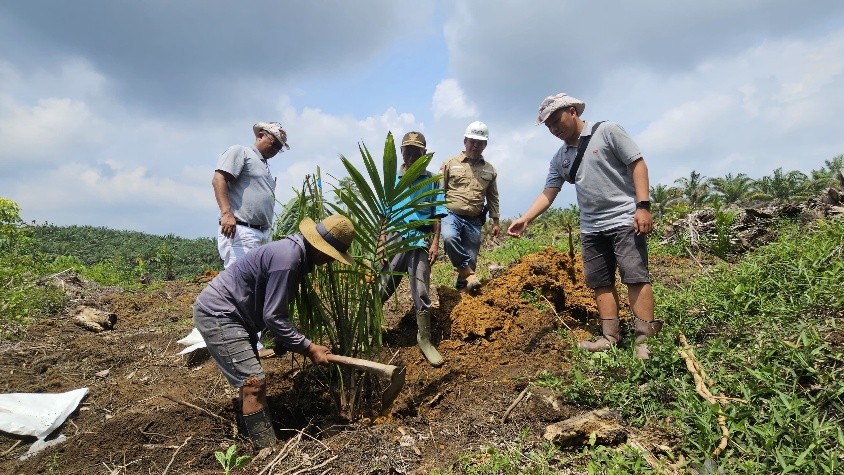
In addition to financial support, Sukasno gained valuable technical knowledge. He received training on how to properly set up his plantation, plant oil palm seedlings correctly, apply fertiliser in the right way and at the right time. He also learned about tumbang ciping, the process of chopping or cutting oil palm trunks into small pieces after they have been felled, making them easier to clear, transport, or leave to decompose as organic matter in the field.
The difference in results was striking. As an independent farmer, Sukasno used to harvest around 600-700 kilograms per plot. Now, as a partner farmer, his harvest has doubled to 1,200-1,400 kilograms per harvest. “In the past, we applied fertiliser randomly, without knowing the correct dosage. Now, thanks to regular guidance from the field assistant, we know exactly what to do, and the results are much better,” Sukasno shared with a proud smile.
A similar story comes from Suwarno, a leader of Gapoktan Sumber Urip. He began replanting through the programme in 2020 and has now completed three phases: the first phase is five years old, the second phase four years old, and the third phase just one year old.

For Suwarno, the greatest advantage of this partnership is access to Dami Mas superior seedlings and structured care for the plantation. This includes land preparation, fertiliser schedules, and regular mentoring by company staff.
Gapoktan discussions are not limited to oil palm but also include intercropping with food and vegetable production. This activity is supported by training from the Department of Food Crops and Horticulture, which also promotes the planting of upland rice (padi gogo). These harvests provide income for farmers while they wait for the new oil palms to mature and become productive.
Support for farmers doesn’t only come from PT KDA. They also receive assistance from Agricultural Extension Officers, such as Amin Harahap from the Department of Food Crops and Horticulture. Amin provides ongoing training on sustainable farming techniques, the use of quality seeds, and land management practices. This collaboration between the company, government, and farmers creates a support system that helps farmers grow and thrive.
To join the programme, farmer groups must meet several requirements. They must collectively manage at least 50 hectares of land or consist of at least 20 members. Farmers are required to submit documents such as copies of their ID cards, family cards, and proof of land ownership – whether in the form of sporadik, SKT, or a formal land certificate, and ensure the land is free of legal disputes. In line with regulations set by the Directorate General of Plantations (Dirjenbun), farmer groups must also be located within 10 kilometres of the last village boundary closest to the company’s plantation area.
With these clear and transparent requirements, farmers feel more confident about joining the programme and planning for a better future.

Today, both Sukasno and Suwarno have experienced a profound transformation in their lives. From once managing their plantations independently and without proper guidance, they are now part of a programme that provides knowledge, support, and hope.
For them, becoming a partner farmer is not only about higher yields, but also about securing a brighter future for their families and the next generation. “I want my children to see that being an oil palm farmer can bring prosperity and modern opportunities. This programme doesn’t just help us today, it prepares us for a better tomorrow,” Sukasno concluded with confidence.