

 Our Shared Values
 Our Business
 Our Foundations
 Our Achievements
 Our Governance
 Conservation Management & Monitoring
 Climate Change
 Community Engagement
 Partnerships & Memberships
 Human Rights & Labour
 Responsible Sourcing
 Responsible Production
 Certifications
 Sustainability Report
 Palm-based Food Products
 Other Food Products
 Oleochemicals
 Bioenergy
 Food & Nutrition Innovation
 Press Releases
 Stories
 Meet Our Experts
 In the News
 Publication
 Shareholder Information
 Disclosure of Information
 Financial Information
 Prospective Suppliers
 Support for Palm Suppliers
 FAQ
FAQ Existing Non-Palm Suppliers
 Graduates & Professionals
 Scholarships
 Internships
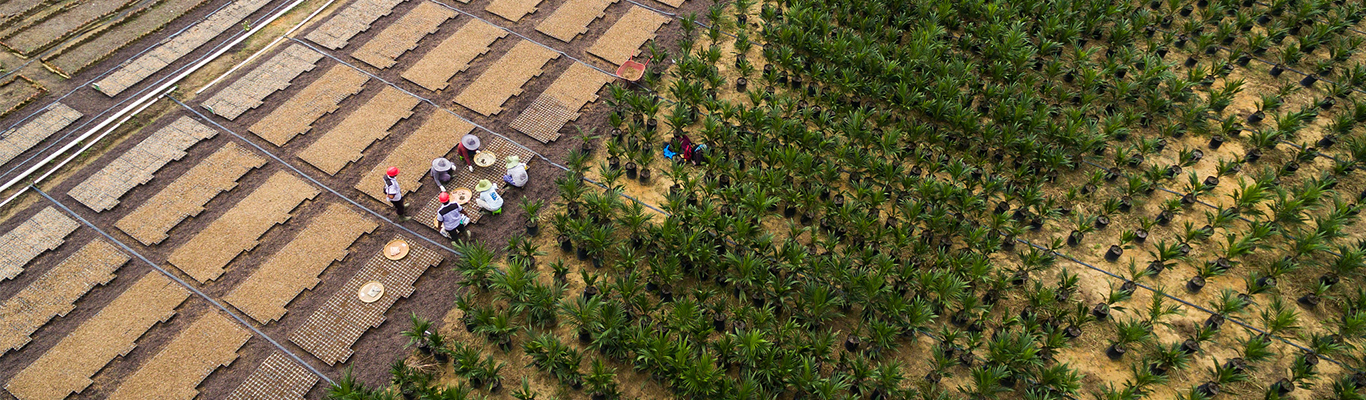
Can nature fight its own battles?
In the middle of a palm plantation, it might surprise you to know that some of the best pest control agents don’t come from a bottle – they come with feathers, wings, or petals.
At Sinar Mas Agribusiness and Food, we’re rethinking the way we manage pests. Instead of relying solely on chemicals, we’re building a natural defence system – made up of barn owls that hunt at night, assassin bugs that ambush caterpillars, and flowering plants that attract predatory and pollinator-friendly insects.
This is Integrated Pest Management (IPM) in action: a smarter, more sustainable approach that works with nature, not against it. The result? Healthier crops, fewer chemicals, and a thriving ecosystem that does more than just survive – it supports the farm itself.
Here are just a few of the natural allies helping us protect palm oil plantations – silently, effectively, and sustainably.
1. Turnera flower (Turnera subulata): The beneficial insect magnet

Planted intentionally around the edges of oil palm plantations, Turnera subulate (white flower), Turnera ulmifolia (yellow flower), and Antigonon leptopus serve as natural attractants for beneficial insects. Their structure provide shelter, while their extra-floral nectaries offer nourishment for a variety of insect predators. In turn, these insects help control populations of soft-bodied pests such as aphids and caterpillars.
“Turnera is more than just a pretty plant,” explains Dian Nurul Izzati, our Entomologist at SMART Research Institute (SMARTRI). She is part of a team of entomologists dedicated to understanding and enhancing ecosystem services in our plantations – from natural pest control to pollination. “Its nectar-rich flowers support predator populations like Sycanus and parasitoids that would otherwise be absent from monoculture landscapes. It helps create a more balanced ecosystem.”
Turnera species like T.ulmifolia (yellow) and T.subulata (white) are commonly planted around our fields as part of our refugia strategy – sustaining predator populations and reducing the need for chemical sprays.
2. Sycanus bug (Sycanus sp): The assassin of nettle caterpillars

Sycanus sp.


Equipped with sharp, piercing mouthparts called a rostrum, Sycanus sp. is an efficient natural predator. It targets soft-bodied pests such as leaf eating caterpillars – including nettle caterpillars, bagworms, and mealybugs – which are among the main defoliators that threaten oil palm health. It doesn’t just attack – it disables the preys. Once injected, the prey is broken down internally, making it easier for the bug to feed.
“They’re silent but deadly,” says Dian. “Sycanus sp. plays a huge role in preventing pest outbreaks, especially in young palms where caterpillars are most destructive.”
With a long lifespan and strong reproductive potential, Sycanus can thrive in the field for several months and lay dozens of eggs. This makes it a sustainable, self-replenishing solution for control, especially in areas where chemical application is limited or discouraged.
3. Barn owls (Tyto alba): Night watchers of the plantation

In the quiet of night, barn owls take flight with excellent vision and hearing – patrolling the fields for rats and other rodents that threaten oil palm crops.
At GAR plantations, specially built nesting boxes are installed approximately every 30 hectares to encourage these natural hunters to settle and breed. A single owl family can consume over a thousand rats in a year, making them one of the most effective and sustainable rodent control measures available.
By fostering barn owl populations, plantations benefit from continuous, low-impact rodent control without needing to rely on chemical solutions.
4. Bacillus thuringiensis: The microbial ally

Not all defenders in the plantation are insects or animals – some are microscopic. Bacillus thuringiensis (Bt) is a naturally occurring soil bacterium used to control bagworms (Metisa plana), one of the most damaging leaf-eating pests in oil palm plantations.
When ingested by the larvae, Bt releases a protein called Cry, which becomes toxic in the alkaline gut of caterpillars, causing them to stop feeding and eventually die.
Unlike synthetic pesticides, Bt targets only specific pest groups and leaves beneficial insects unharmed. This makes it an ideal choice for environmentally sensitive areas or plantations pursuing chemical-free pest management.
5. Antigonon: Refugia plant with a purpose

Antigonon leptosus is a flowering plant used as refugia – companion plants which provide shelter and food for beneficial insects like parasitoids and lacewings. Their nectar-rich blooms attract natural enemies of pests and help regulate pest populations without chemicals.
This plant is often planted along field edges or conservation areas, where it can flower year-round and support a stable population of helpful insects – even when pests are not present in large numbers.
Beyond their ecological role, this plant also acts as ground cover which help reduce erosion and improve soil health.
Frequently Asked Questions (FAQs)
Nature already knows how to protect itself – we’re simply learning to work with it. Learn more about how we grow with purpose for sustainable agriculture in our Sustainability Report 2024.