

 Our Shared Values
 Our Business
 Our Foundations
 Our Achievements
 Our Governance
 Conservation Management & Monitoring
 Climate Change
 Community Engagement
 Partnerships & Memberships
 Human Rights & Labour
 Responsible Sourcing
 Responsible Production
 Certifications
 Sustainability Report
 Palm-based Food Products
 Other Food Products
 Oleochemicals
 Bioenergy
 Food & Nutrition Innovation
 Press Releases
 Stories
 Meet Our Experts
 In the News
 Publication
 Shareholder Information
 Disclosure of Information
 Financial Information
 Prospective Suppliers
 Support for Palm Suppliers
 FAQ
FAQ Existing Non-Palm Suppliers
 Graduates & Professionals
 Scholarships
 Internships

In the remote corners of North Sumatra, where conservative traditions often limit opportunities, women like Sutiyem are paving the way for change. At 52, her hands, weathered but strong, have tilled soil, tapped rubber, and now tend to RSPO-certified palm oil.
As a member of Koperasi Jasa Sawit Lepan Jaya (KJSLJ), a cooperative of 250 independent smallholders managing more than 300 hectares, Sutiyem is part of a broader movement transforming the palm oil industry. In 2024, KJSLJ achieved RSPO certification, reflecting their commitment to sustainable farming.
Her story opens the layers of a quiet revolution, where women farmers are breaking barriers and reshaping an industry long dominated by men.
From fields of tradition to sustainable palm oil
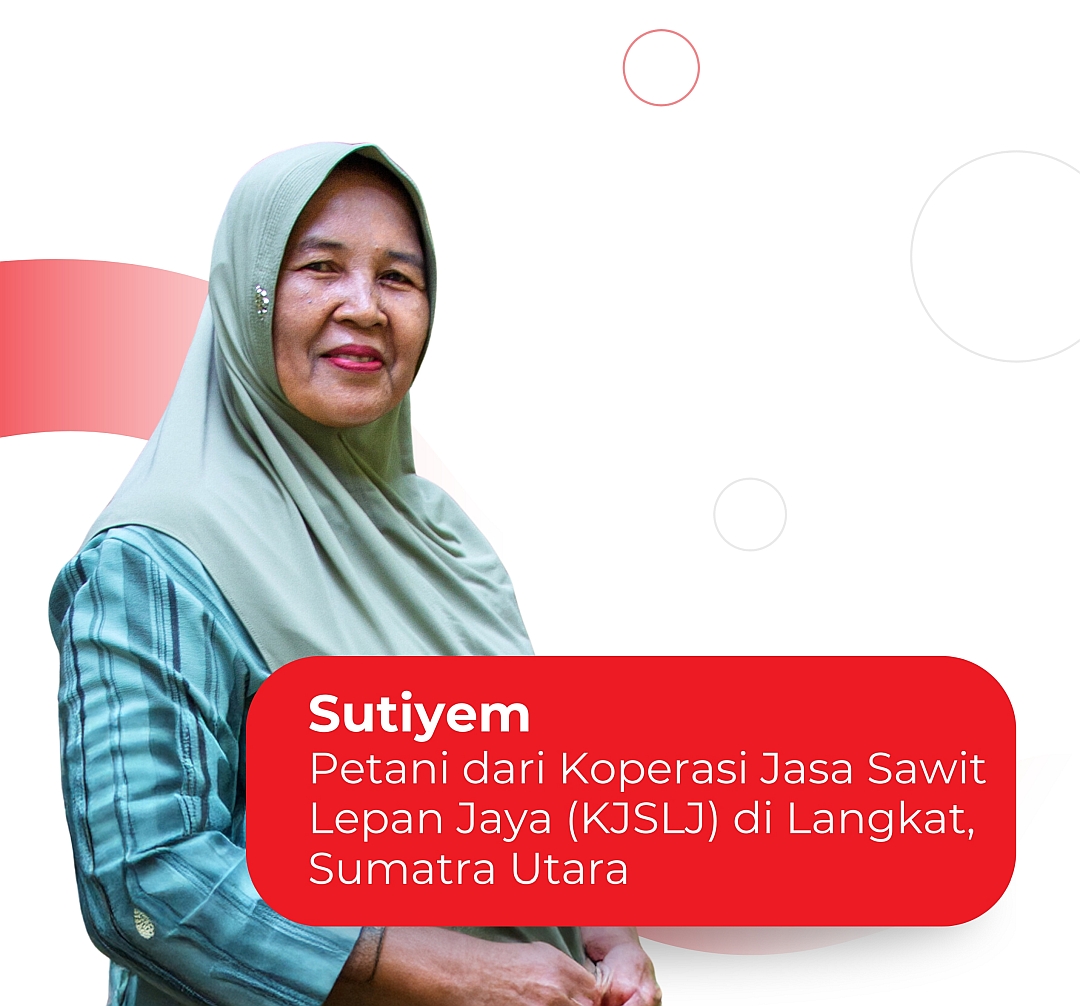
Sutiyem’s roots in farming run deep. Born in 1972 of a family of Javanese transmigrants, her earliest memories are tied to the land in Dusun Paya Lebar, North Sumatra in Indonesia. Her father, a rice farmer, introduced her to farming, passing down the skills and traditions that shaped her journey.
By her teenage years, rice had given way to rubber as the family shifted crops in search of better opportunities. Sutiyem quickly adapted, mastering the art of tapping rubber trees and collecting latex. These early years taught her the value of hard work and the importance of nurturing the land – a lesson she would carry forward.
In 2008, when rubber prices plummeted, she faced a tough choice. Together with her husband, she decided to plant oil palms, despite knowing little about the crop. They sought advice from neighbouring farmers and slowly built their knowledge. It was a leap of faith, but one that paid off as their farm began to thrive.
Years later, her farming journey intersected with the Sawit Terampil programme, a capacity-building initiative by GAR. This programme introduced her to sustainable farming techniques, such as fertiliser application and proper upkeep management. It also provided crucial support like land mapping services that helped her secure important documentation for her business, including the Cultivation Registration Certificate (STDB).
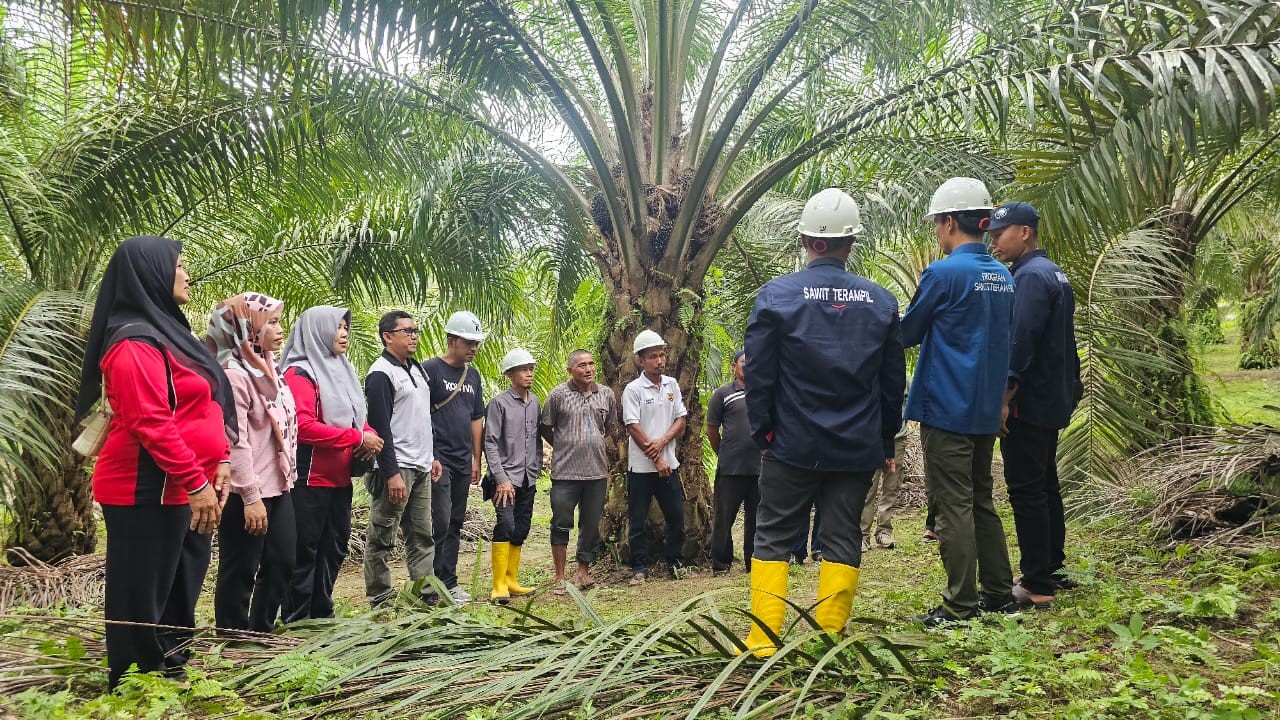
“When we joined the programme, I finally understood what sustainability meant – not just for the land, but for our livelihoods,” Sutiyem shares. “These small changes transformed the way we farmed.”
“At the same time, what stood out wasn’t just the practical skills we learned – like efficient fertilisation or managing pests sustainably – but the understanding that we are stronger when we work together. No one is left behind.”
Women farmers at the forefront of change
In addition to managing her own farm, Sutiyem actively mentors women palm oil farmers, providing advice, and encouraging them to adopt sustainable practices and join the cooperative. By becoming part of KJSLJ and earning RSPO certification, these women gain access to better markets, higher incomes, and increased recognition of their efforts. Today, 16 women are active members of KJSLJ.
For Sutiyem, mentoring others comes from a deeply personal place. “I know how hard it can be to navigate farming alone,” she says. “If I can help another woman avoid some of the challenges I faced, then I’ve done something meaningful. Empowering women strengthens our entire community.” She believes that women leaders in farming can drive broader changes – not just in agriculture but in how women are seen as capable decision-makers.
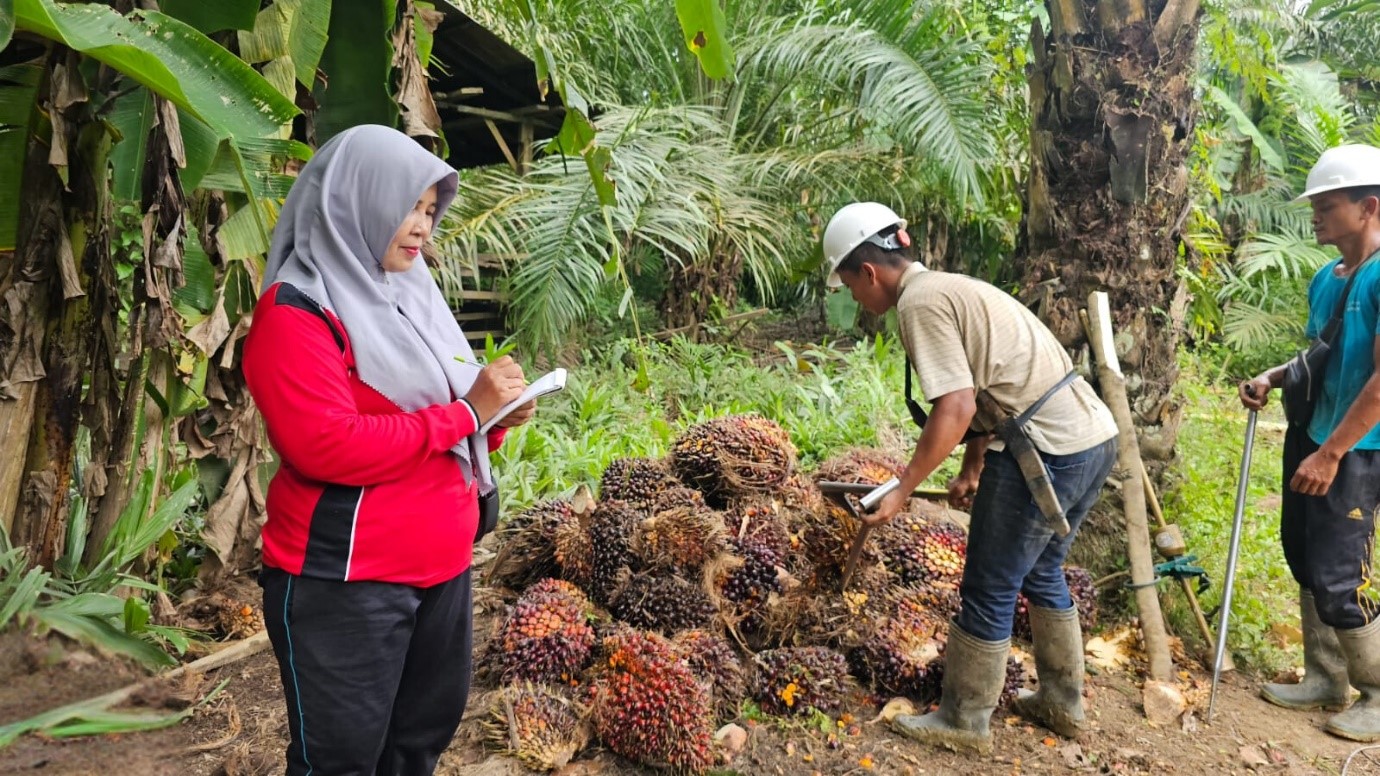
She also actively joins cooperative meetings to ensure transparency and fairness in how funds are allocated for village infrastructure projects like roads.
Fostering a legacy of sustainability and security
For Sutiyem, improved farming practices have not only led to RSPO certification but have also transformed her approach to agriculture. From adopting selective spraying methods to using precise fertilisation techniques and systemic harvest recording, these changes have made her farm more efficient, environmentally friendly, and financially sustainable.
Beyond the technical improvements, sustainable farming has become central to Sutiyem’s aspirations for a better future for her family and community. “Sustainability isn’t just about the land. It’s about ensuring that my children and our community can thrive for generations to come,” she explains. Her children now actively participate in managing the farm, learning sustainable practices that will keep the land fertile for generations to come.
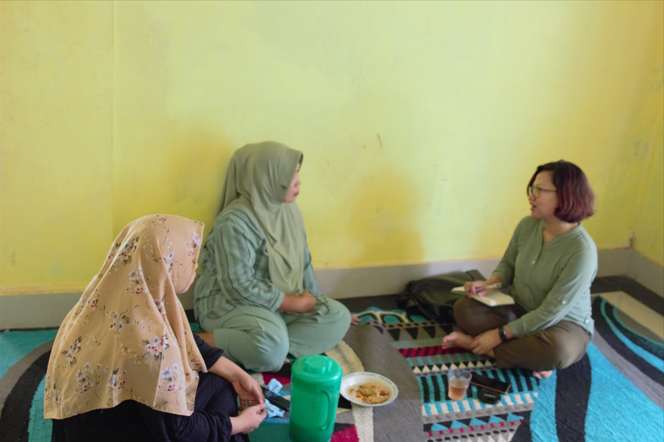
Her personal journey is deeply connected to the larger progress of her cooperative. The success of KJSLJ in achieving RSPO certification reflects the collective efforts of its members, supported by Sawit Terampil programme. With over 9,000 smallholders trained to date, Sawit Terampil continues to empower farmers like Sutiyem with knowledge and tools for sustainable farming.
For Sutiyem, being part of this broader movement is a source of pride. “I hope more women farmers will take this path,” she says. “We’re not just growing palm oil. We’re growing opportunities for the future.”
As International Women’s Day calls for the world to #AccelerateAction, stories like Sutiyem’s remind us that transformative change starts at the grassroots. By empowering women farmers and embracing sustainable practices, the palm oil industry is creating a future where growth and resilience go hand in hand.
Our Sawit Terampil empowers independent smallholders in sustainable agricultural practices. Through trainings and mentorships, we prepare them for certifications to unlock new opportunities and boost their incomes.
Watch to see how Sawit Terampil programme drives transformation.