

 Our Shared Values
 Our Business
 Our Foundations
 Our Achievements
 Our Governance
 Conservation Management & Monitoring
 Climate Change
 Community Engagement
 Partnerships & Memberships
 Human Rights & Labour
 Responsible Sourcing
 Responsible Production
 Certifications
 Sustainability Report
 Palm-based Food Products
 Other Food Products
 Oleochemicals
 Bioenergy
 Food & Nutrition Innovation
 Press Releases
 Stories
 Meet Our Experts
 In the News
 Publication
 Shareholder Information
 Disclosure of Information
 Financial Information
 Prospective Suppliers
 Support for Palm Suppliers
 FAQ
FAQ Existing Non-Palm Suppliers
 Graduates & Professionals
 Scholarships
 Internships
Lubuk Lungkang, South Sumatra, 12 May 2026 – For Dina Julianti, coffee is more than just a drink. Through her love of coffee, she recognised the potential growing within her own village: robusta coffee from Lubuk Lungkang Village, Lahat Regency, South Sumatra.
From there, Dina developed a local coffee business through two brands, Lungkang Coffee and DJ Coffee. The name DJ Coffee was taken from her own name, Dina Julianti. The business began from her desire to create added value for local coffee while opening up economic opportunities for the surrounding community.
Today, Lungkang Coffee and DJ Coffee produce 100% robusta coffee with a production capacity of around 100–500 kilograms per month.
The products consist of two varieties: red cherry coffee beans and rainbow coffee beans. The coffee cherries are sourced from plantations owned by residents of Lubuk Lungkang Village.
Beyond coffee processing, Dina’s business has also become a productive space for women in the village. Currently, around 20 employees, all of whom are women from Lubuk Lungkang Village, are involved in various stages of production, from bean sorting to post harvest processing.
“I have always enjoyed coffee. My eldest child also likes coffee, and that inspired the idea to develop coffee from our own village. I saw the potential of Lubuk Lungkang coffee, but access to processing and marketing had been limited. I wanted this coffee to have added value and bring benefits to the women around us,” said Dina.
So far, Lungkang Coffee and DJ Coffee products have been marketed across Lahat Regency. However, Dina acknowledged that production still faces challenges, particularly during the roasting stage, which is still carried out manually using a traditional metal pan.
While this method has become part of the coffee’s distinctive character, it also limits production capacity. When demand increases, manual roasting requires more time and labour, making it difficult to significantly scale up production.
“Our roasting process is still manual using a metal pan. It gives the coffee its own character, but the capacity is limited. We hope that in the future the production process can improve, the coffee quality can be maintained, and the market reach can expand further,” Dina added.
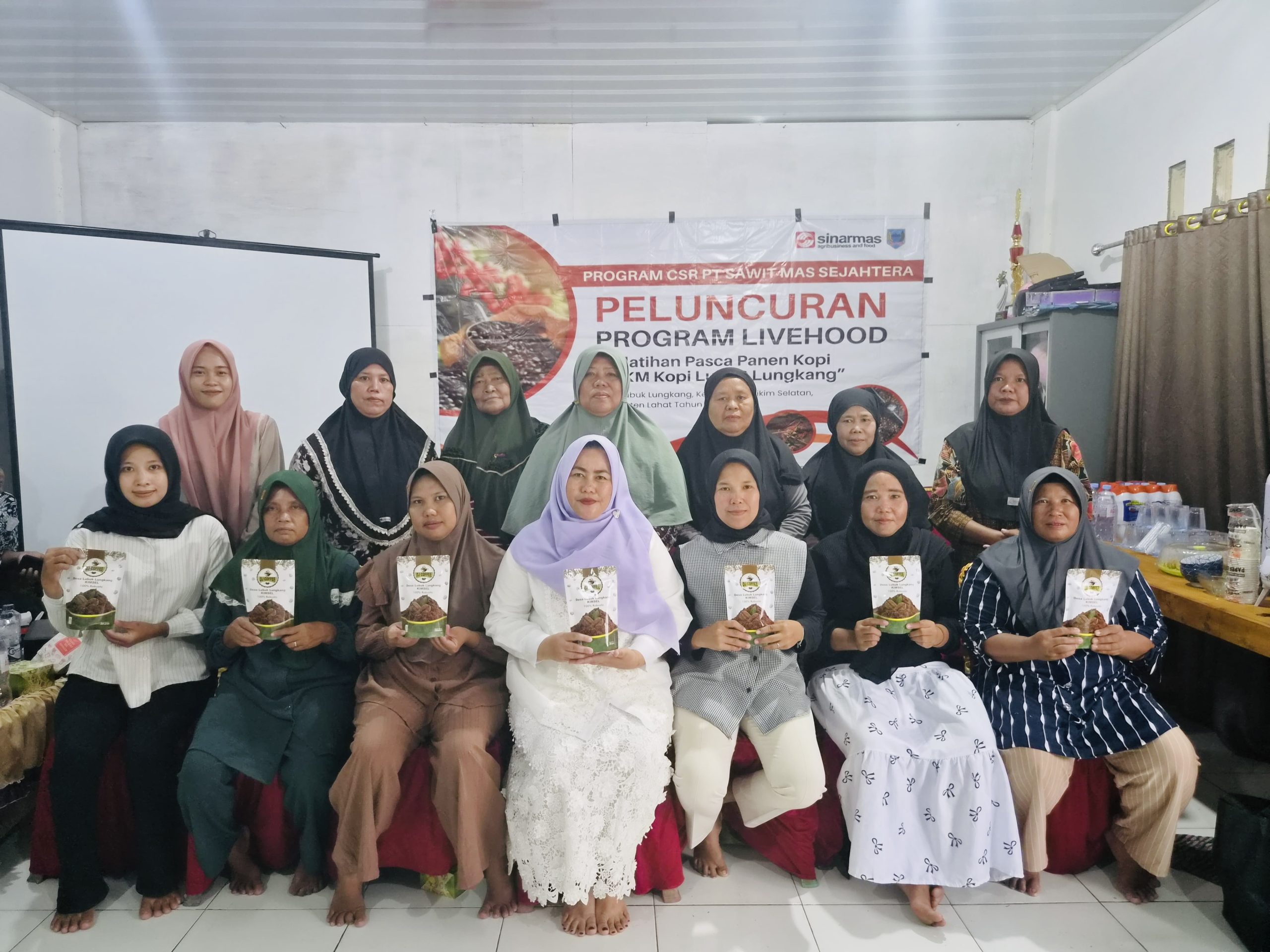
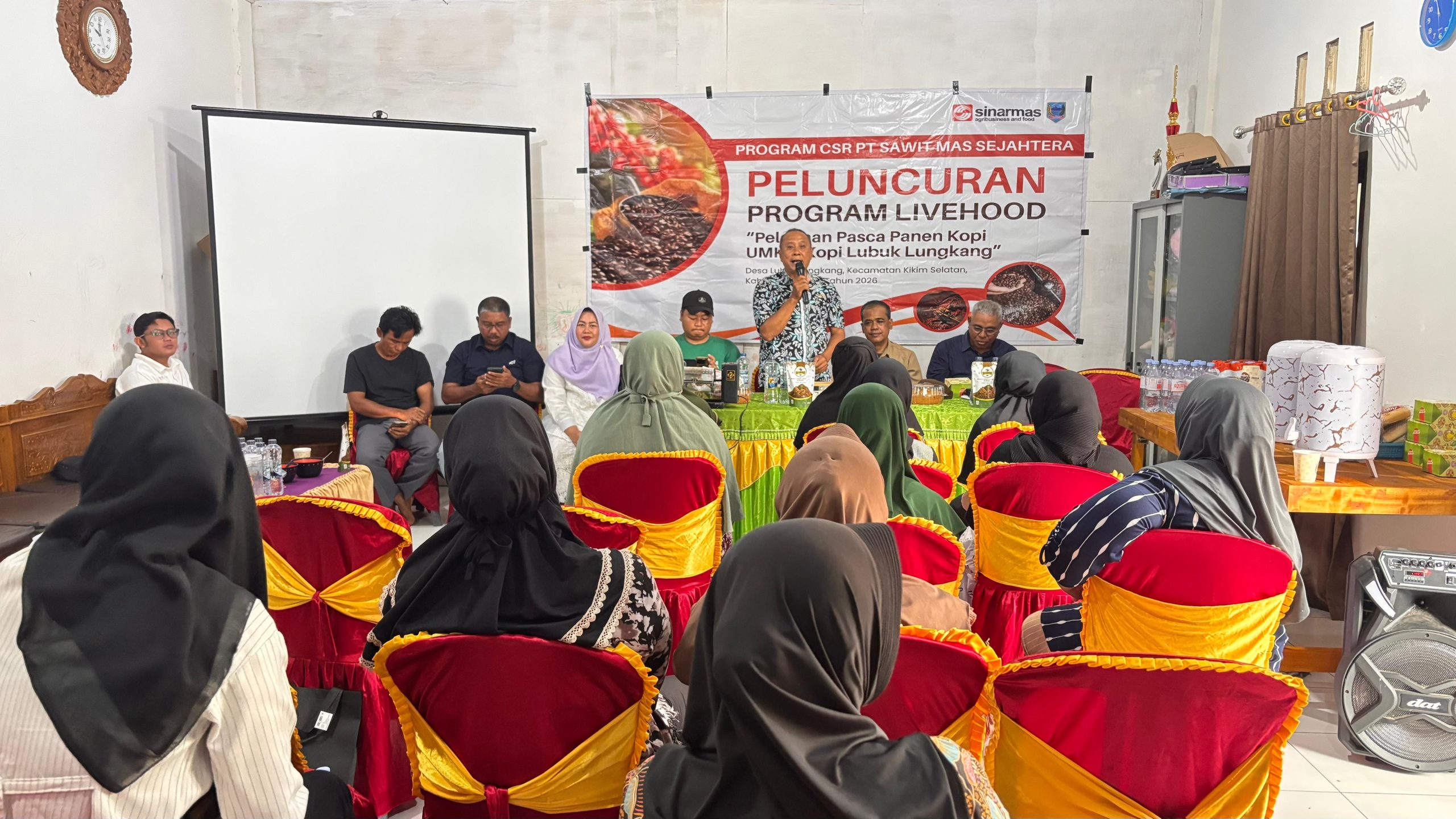
To support the development of this local potential, PT Sawit Mas Sejahtera (PT SMS), a subsidiary of Sinar Mas Agribusiness and Food, implemented a micro, small and medium enterprise (MSME) assistance programme focused on improving coffee post harvest capacity for the Lubuk Lungkang MSME group. The programme is a continuation of training activities that began in 2025.
In 2026, the programme partnered with Sekolah Tani Indonesia as facilitator. The assistance aims to help MSME participants improve post harvest processing quality, strengthen production capacity, and support business development to reach wider markets.
This community empowerment initiative forms part of the Bright Future Initiative, Sinar Mas Agribusiness and Food’s MSME acceleration network, which has supported 113 MSMEs in implementing and developing 189 projects across the company’s operational areas in Indonesia.
Through this assistance programme, Lubuk Lungkang coffee is expected to continue growing as a local product with added value. More importantly, the story of Dina and the women of Lubuk Lungkang Village demonstrates how village potential can become a driver of community economic growth when managed consistently and supported sustainably.
About Sinar Mas Agribusiness and Food
Sinar Mas Agribusiness and Food, which operates under Golden Agri-Resources (GAR), is one of the leading palm oil plantation companies, with a total planted area in Indonesia of over half a million hectares, including plasma, and works with more than 800,000 smallholders farmers. As part of GAR’s global agribusiness with a seed-to-shelf approach, the company manages an integrated business across the production of food products derived from vegetable oils, and continues to grow with purpose, delivering long-term value through sustainable palm oil production practices.
In Indonesia, the company’s main activities include oil palm cultivation and harvesting, processing fresh fruit bunches into Crude Palm Oill (CPO) and palm kernel, and refining CPO into value-added products such as cooking oil, margarine, shortening, and biodiesel for markets worldwide. The company also operates in China and India, with facilities for processing vegetable oils and food products. In 2025, the company produced approximately 2.8 million tonnes of palm-based products, across more than 30 consumer brands.
Sustainability is an integral part of the company’s operations. In line with GAR’s Responsible Agri-Commodity Sourcing policy and Collective for Impact framework, it is committed to ensuring responsible practices, enhancing supply chain transparency, and delivering positive environmental and social impact. Currently, 99.5% of its palm oil supply chain in Indonesia is traceable to the plantation level, while non-palm commodities are 100% traceable to the mill level.
Its parent company, GAR, was founded in 1996 and listed on the Singapore Exchange in 1999, with a market capitalisation of US$2.8 billion as of 31 December 2025. Flambo International Limited, an investment company, is currently GAR’s largest shareholder, with a 50.56% stake. GAR has several subsidiaries, including PT SMART Tbk, which has been listed on the Indonesia Stock Exchange since 1992. With operations in 14 countries and products sold in over 110 markets, GAR combines global scale with local insight. Beyond palm, GAR is a global trader of sugar, soybean, sunflower, and coconut, supported by strong shipping and logistics capabilities.