

 Our Shared Values
 Our Business
 Our Foundations
 Our Achievements
 Our Governance
 Conservation Management & Monitoring
 Climate Change
 Community Engagement
 Partnerships & Memberships
 Human Rights & Labour
 Responsible Sourcing
 Responsible Production
 Certifications
 Sustainability Report
 Palm-based Food Products
 Other Food Products
 Oleochemicals
 Bioenergy
 Food & Nutrition Innovation
 Press Releases
 Stories
 Meet Our Experts
 In the News
 Publication
 Shareholder Information
 Disclosure of Information
 Financial Information
 Prospective Suppliers
 Support for Palm Suppliers
 FAQ
FAQ Existing Non-Palm Suppliers
 Graduates & Professionals
 Scholarships
 Internships
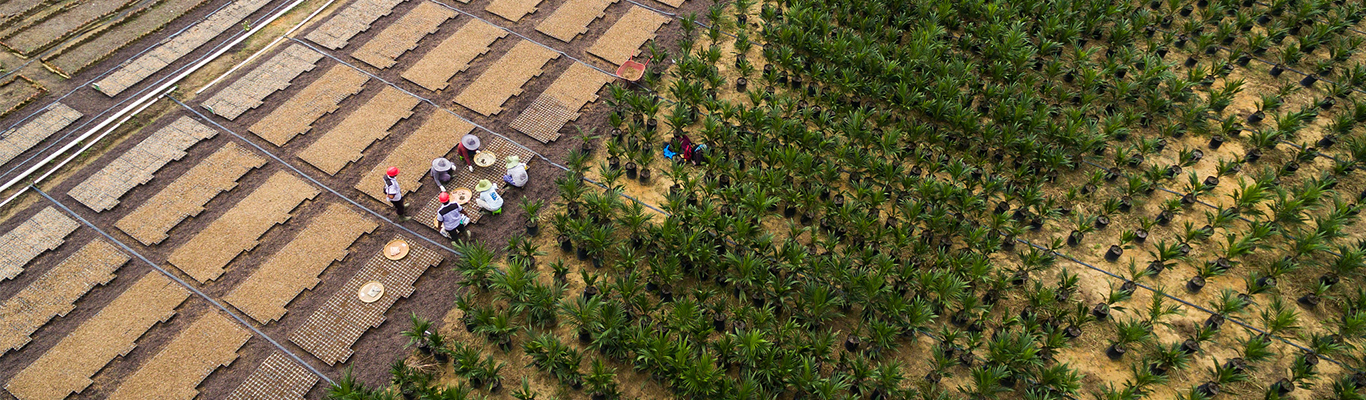
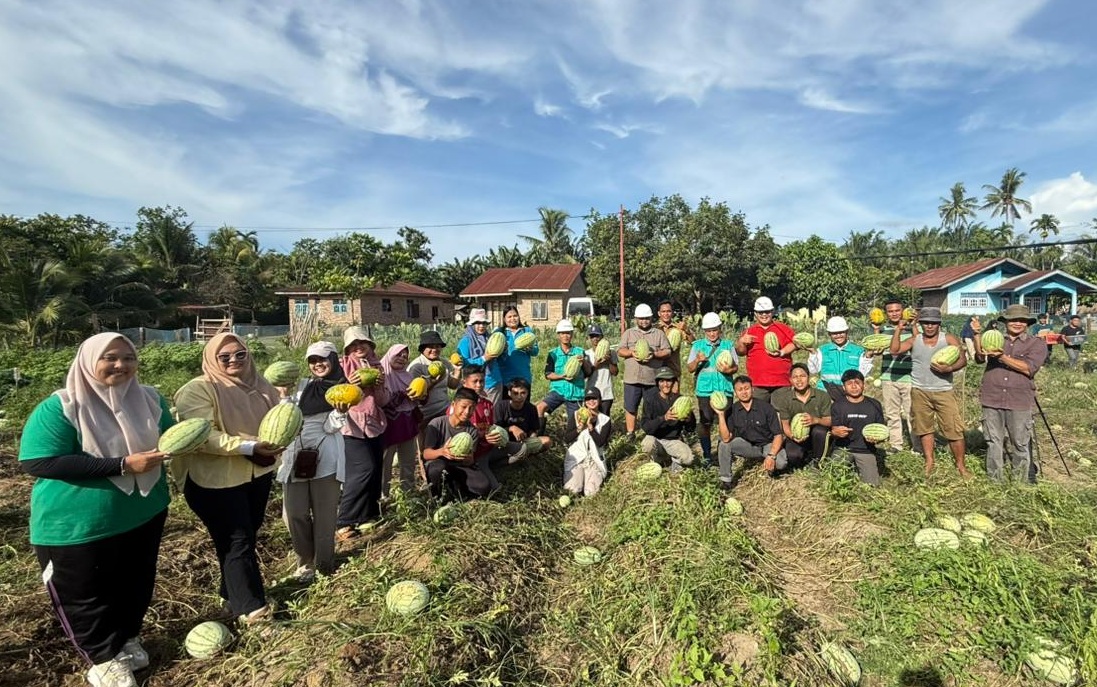
Labuhanbatu Utara, North Sumatra, 3 July 2026 – Amid rising chemical fertiliser prices and increasingly patchy supply, vermicompost made from cattle manure is proving a promising solution for farmers in Aek Korsik Village, Labuhanbatu Utara, North Sumatra, looking to lift their agricultural productivity.
Through a watermelon demonstration plot developed by PT SMART Tbk, a subsidiary of Sinar Mas Agribusiness and Food, in partnership with Sekolah Tani Indonesia (STI), farmers have been able to see first hand the benefits of vermicompost as an organic fertiliser alternative.
For years, cattle manure in Aek Korsik Village went largely underused. Some farmers had been applying it directly to their fields, but the practice carries risks, since the nutrients aren’t yet ready for absorption, which can damage crops and even encourage pests and disease.
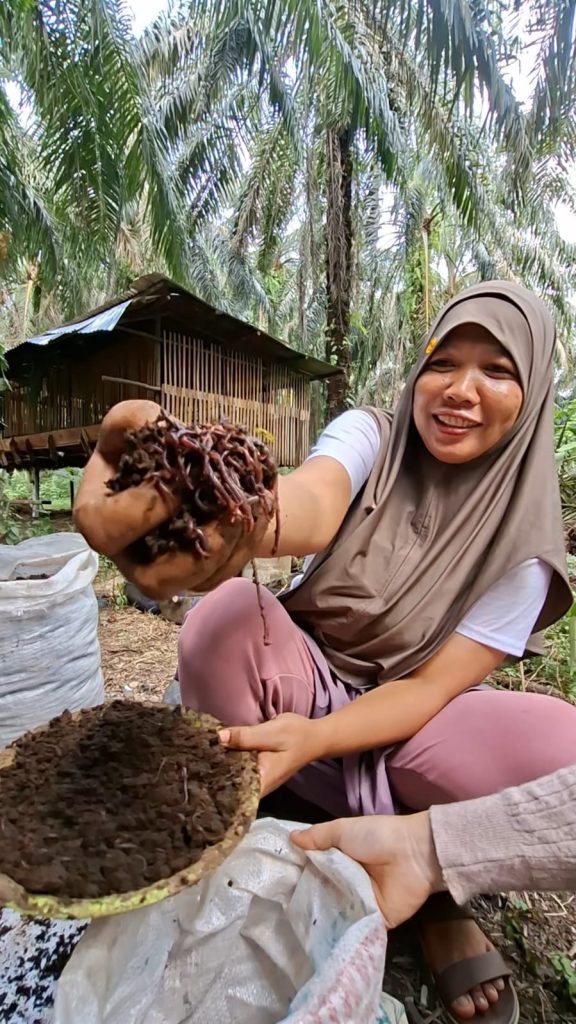
Recognising this challenge, PT SMART Tbk and STI have been working alongside the community since August 2025 to process cattle waste through vermicomposting. The method relies on African Night Crawler earthworms to break down livestock waste into vermicompost, an organic fertiliser that naturally helps restore soil fertility.
The programme involves farmers from the Sumber Jaya Farmers’ Group in Aek Korsik Village, currently ten members strong. Through hands on mentoring, the group has been trained to apply vermicomposting techniques directly at the community level.
The initiative delivers more than just organic fertiliser that improves soil structure, boosts microorganism activity, and supports healthier root development. It has also opened up a new economic avenue through worm cultivation. Beyond breaking down waste, the worms themselves carry commercial value, useful for fish feed and various industrial applications.
Through this approach, cattle manure once left unused is now being transformed into organic fertiliser, easing farmers’ reliance on chemical alternatives. The resulting improvement in soil fertility is expected to support a range of crops, from vegetables and fruit to oil palm, while opening up additional income opportunities for the community.
To see the benefits for themselves, farmers and the mentoring team developed a watermelon demonstration plot on 1,000 square metres of land. Through this trial plot, vermicompost was compared against conventional chemical fertiliser, allowing farmers to observe the difference for themselves in the field.
Observations showed that watermelon plants grown with vermicompost developed stronger root systems, benefited from looser, more workable soil, and showed greater resilience compared with plants grown using chemical fertiliser. Chemical fertiliser use could also be reduced by around 30 per cent, while productivity rose by roughly 15 per cent.
Legimin, a farmer from Dusun Patok Besi, Aek Korsik Village, said the changes were clear over the course of a single planting season. “We could see the difference in plant condition and soil quality with our own eyes. Vermicompost has delivered very promising results and has the potential to lower production costs for watermelon farming, while the plants themselves look stronger and healthier,” he said.
Echoing this, Fatoni Saputra, Programme Director at Sekolah Tani Indonesia, said the demonstration plot was the most effective way to show that livestock waste can be turned into a solution that delivers real benefits for farmers.
“This demonstration plot proves that cattle manure can be transformed into a quality fertiliser that boosts watermelon productivity while reducing farmers’ dependence on chemical fertiliser. Beyond improving agricultural yields, this initiative also opens up new business opportunities through organic fertiliser production based on local resources,” he explained.
Community enthusiasm was evident when harvest season arrived. Dozens of housewives came directly to the field to buy the watermelons grown by local farmers. The moment captured how waste once left unused is now yielding food products in genuine local demand, while creating added value for the farmers themselves.
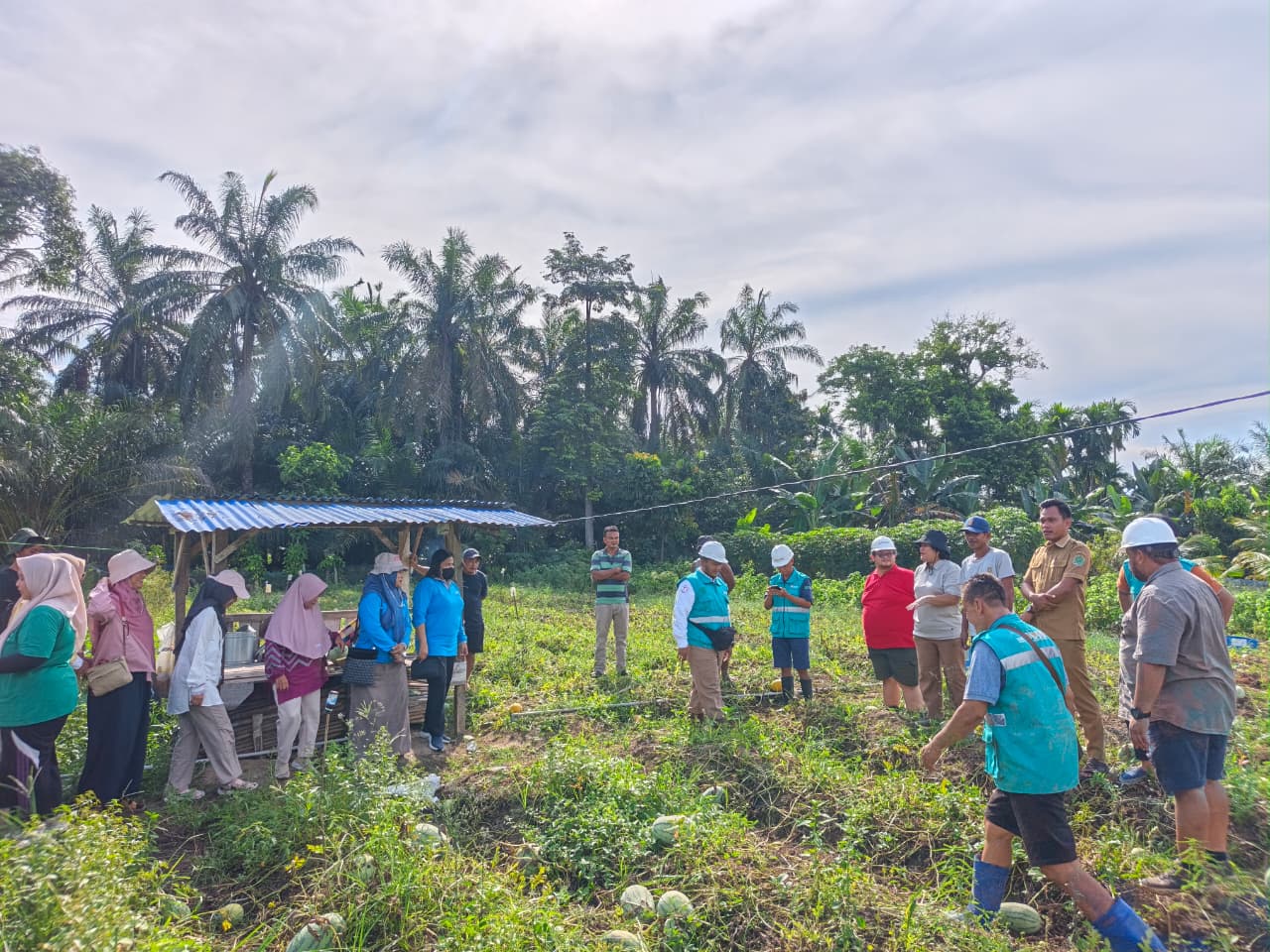
Sucipto, Estate Manager at PT SMART Tbk’s Padang Halaban Estate, said the company hopes the initiative will help the community make independent and sustainable use of local resources.
“Through this mentoring programme, the community can develop the skills needed to turn cattle manure into a new source of income. From worm cultivation and vermicompost production through to food crop development, we hope the community will have more options to increase household income while building a more sustainable farming system,” said Sucipto.
This community empowerment programme forms part of the Bright Future Initiative, Sinar Mas Agribusiness and Food’s network for accelerating Micro, Small, and Medium Enterprises (MSMEs), which has so far supported 163 MSMEs in realising and developing 280 projects across the company’s operational areas in Indonesia.
Through this initiative, the company hopes to continue strengthening the economic resilience of beneficiary communities and fostering independent, locally rooted enterprise.