

 Our Shared Values
 Our Business
 Our Foundations
 Our Achievements
 Our Governance
 Conservation Management & Monitoring
 Climate Change
 Community Engagement
 Partnerships & Memberships
 Human Rights & Labour
 Responsible Sourcing
 Responsible Production
 Certifications
 Sustainability Report
 Palm-based Food Products
 Other Food Products
 Oleochemicals
 Bioenergy
 Food & Nutrition Innovation
 Press Releases
 Stories
 Meet Our Experts
 In the News
 Publication
 Shareholder Information
 Disclosure of Information
 Financial Information
 Prospective Suppliers
 Support for Palm Suppliers
 FAQ
FAQ Existing Non-Palm Suppliers
 Graduates & Professionals
 Scholarships
 Internships
In some villages, he’s known simply as “Pak Irpan”. Not as a boss or expert, but as a familiar face who listens, returns, and stays the course.
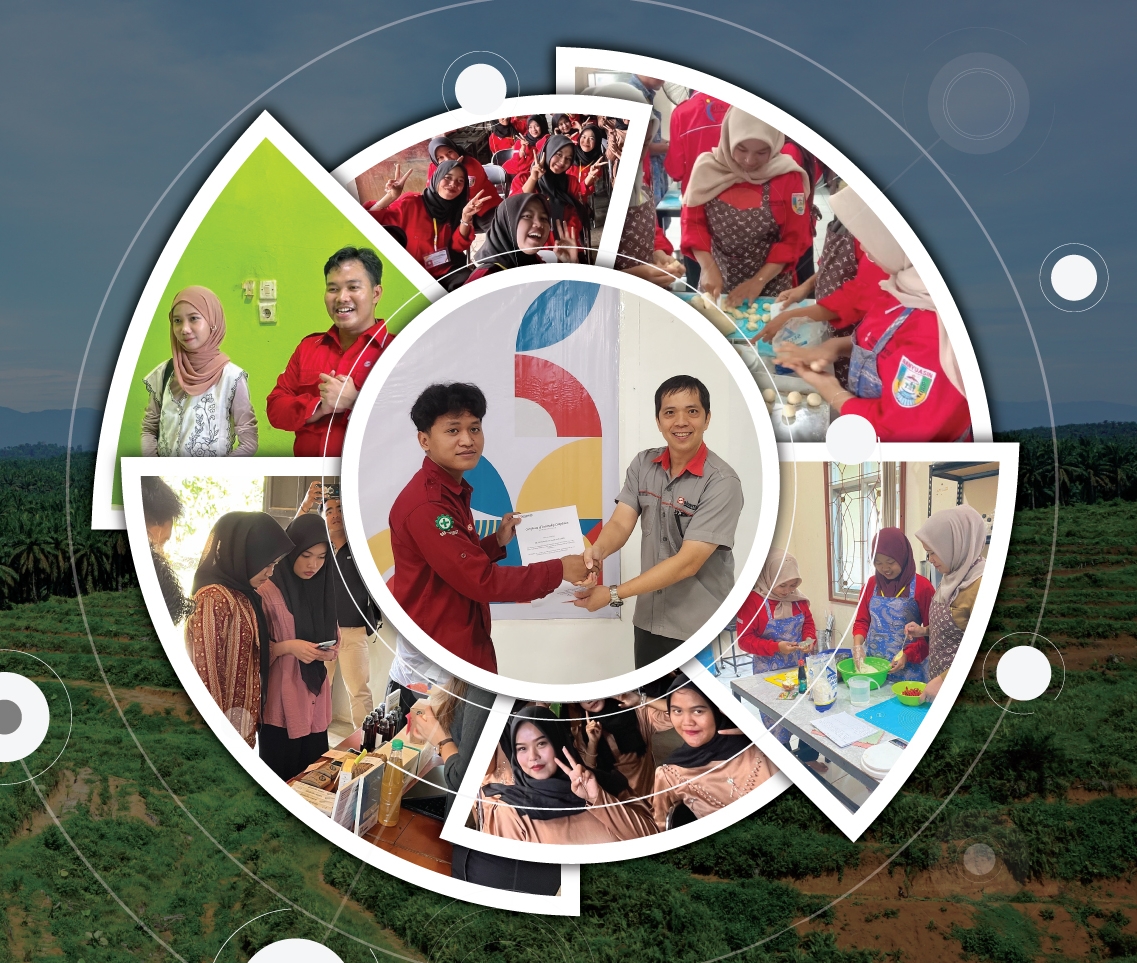
As Head of Community Economic Empowermentat at Sinar Mas Agribusiness and Food, Irpan Kadir doesn’t just talk about impact – he lives it. Through his leadership, our Bright Future Initiative made a real difference in 2024, supporting over 100 small businesses and more than 180 community projects across Indonesia.

But for Irpan, numbers don’t drive the work. People do.
“The biggest reward is seeing people stand on their own. When they no longer need us – that’s when we’ve done our job right,” says Irpan.
From supporting fish farmers to mentoring young entrepreneurs, Irpan helps transform ideas into sustainable livelihoods. His approach mixes strategy with empathy – grounded in a simple but powerful belief: rural communities don’t need charity. They need partnership.
Q: What led you to a life in community empowerment?
Irpan: Before joining Sinar Mas Agribusiness and Food, I spent over 15 years as a community development consultant. In 2017, I came on board to support supplier engagement. It was a completely new world for me at the time. Then in 2020, just as the pandemic hit, I was asked to lead our Community Economic Empowerment department. It was a tough time. Travel restrictions made community engagement incredibly difficult, but it also pushed us to think more creatively and focus on what really matters.
What drives me is simple: I’ve seen too many communities, especially in rural Indonesia, struggle with limited opportunities for economic and human development. The company gives me a platform to support these communities in ways that are sustainable, practical, and long-term.
Q: What achievements are you most proud of from the past year?

Irpan: In 2024, what made me most proud wasn’t just the number of communities we supported – 184 initiatives and over 100 MSMEs – but seeing many of them start building complete local ecosystems. These ecosystems support the entire business chain – from sourcing raw materials to accessing markets.
For example, in Kalimantan, we helped build an inclusive aquaculture system. In Ketapang, we introduced integrated ecological farming. These programmes are designed to strengthen the full value chain from production inputs all the way to market access. When communities have control over their resources, the impact isn’t just meaningful, it’s sustainable.
Q: Is there a moment that stayed with you?
Irpan: The stories that stay with me are always about people, especially those who become what we call local champions.
These are programme participants who take what they’ve learned, run with it, and keep the project going on their own. Some even train others. That’s when we know our job is done right. It’s bittersweet, because stepping back is always hard. But watching them thrive independently? That’s ultimate goal.
Local story: From teacher to chicken farmer

Azulhi started a small egg-farming project (known as a layer chicken programme) in Nanga Suhaid, Indonesia, with 250 hens and a big dream. But as the business grew, he struggled to manage it alone – until he invited Faisal, a local high school teacher, to join.
With experience in broiler farming and a degree in education, Faisal brought structure to the operation. He improved technical systems, introduced better record-keeping, and helped turn it into a sustainable group-run business.
Today, he’s mentoring other young people to take part. This is exactly the kind of homegrown leadership that turns small projects into lasting change.
Q: GAR often talks about ‘doing well and doing good’. What does that look like to you?

Irpan: To me, it’s about making sure our business success translates into real value for the communities around us. Companies don’t operate in a vacuum. Our activities have a footprint – social and environmental. And we have a responsibility to manage that footprint with care.
The better we perform, the more we can give back – whether through education programmes, environmental protection, or helping the local economy thrive. It’s a cycle that feeds itself, if we do it right.
Q: How do you keep a balance between business goals and community needs?
Irpan: It starts with recognising that the two don’t have to be in conflict. When communities thrive, businesses do too. Our programmes are designed to reduce risks and build stronger relationships with the people around us. That helps us operate more smoothly and sustainably in the long run.
For example, by helping communities build their own economic ecosystems, we reduce dependency and avoid tensions that can arise when people feel left out of growth. So, we’re not only giving back, but also investing in stability, trust, and a social license to operate.
Q: What challenges come with working so closely on the ground?
Irpan: Plenty. One of the biggest is managing the dynamics within the community groups themselves.
“The better we perform, the more we can give back – whether through education programmes, environmental protection, or helping local economy thrive.”
Irpan Kadir (Head of Community Economic Empowerment)
It’s always encouraging when a project gains wide adoption, but that momentum can also bring challenges – especially if the group isn’t ready to manage competing interests. Some participants get discouraged or feel left out. But these are growing pains. They’re part of the process of a community becoming more self‑reliant.
Keeping all stakeholders aligned, including village heads, small business leaders, community leaders, is another challenge. That’s why we take a participatory approach from the start. When everyone’s voice is heard early on, it’s much easier to move forward together.
Q: Have you seen this work make a difference for the next generation?

Irpan: Absolutely. One of the most promising shifts we’ve seen is the rise of youth participation. More young people are joining our training, coaching, and mentoring programmes, and many are stepping up as leaders in their communities.
This is closely tied to one of our Collective for Impact sustainability framework goals: to empower 20,000 rural youth by 2035 through skills training, mentorship, and entrepreneurship. We’re starting to see that momentum build.
For those pursuing higher education, we help connect them to scholarship opportunities through partners like Eka Tjipta Foundation (ETF), Tzu Chi, and others. These young people are the future. If we can support their journey now, they’ll be the ones driving impact tomorrow.
Q: What’s your vision for the future of Bright Future Initiative and community empowerment at GAR?
Irpan: I want to see more local champions – leaders who are born within the communities we support. People who’ve walked the journey and now have the skills, knowledge, and confidence to carry it forward.
These are the people who will sustain and grow what we’ve started. That’s the real goal – not to stay in the spotlight, but to pass the torch and watch it burn brighter in their hands.
When communities thrive, we all grow. Learn how GAR’s community economic empowerment supports growth with purpose.